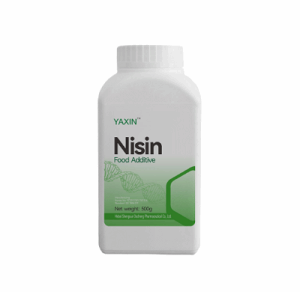
Nisin Powder Price

Nisin’s unique cross-linked structure confers heat resistance, a key advantage for high-temperature processed foods. Its stability under heat directly influences whether it can retain activity post-sterilization to inhibit residual or recontaminating bacteria.
Moderate heat (pasteurization, 72–85℃): Nisin retains >90% activity, making it effective in pasteurized dairy products or canned vegetables. For example, in pasteurized milk, nisin added at 10–15 mg/kg inhibits psychrophilic spoilage bacteria (e.g., Pseudomonas spp.) during refrigerated storage, extending shelf life by 2–3 times.
High heat (autoclaving, 121℃ for 15–30 minutes): Nisin still retains 80%+ activity, enabling its use in retorted foods like canned meat or sterilized sauces. It synergizes with heat to reduce the thermal resistance of bacterial spores (e.g., Bacillus cereus), lowering the required sterilization intensity while maintaining efficacy against spore germination.
Ultra-high heat (>130℃ or prolonged exposure): Excessive heat disrupts nisin’s lanthionine cross-links, leading to irreversible activity loss. In such cases, adding nisin post-heat treatment (during cooling) is necessary to preserve efficacy, as pre-addition would result in degraded nisin unable to inhibit subsequent microbial growth.
Other supplier products
|
|
Nisin 25KG |
Agricultural Field: Crop and Livestock Protection Crop protection: Used as a biopesticide to inhibit gram-positive plant pathogens (e.g., Clavibact... |
|
|
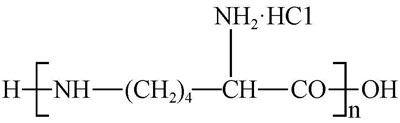
ε-Polylysine hydrochloride |
One of the key benefits of ε-Polylysine hydrochloride as a food preservative is its ability to inhibit the growth of a wide range of microo... |
|
|
Chlortetracycline Premix |
Chlortetracycline Premix in livestock and poultry feed: 1. Purpose: · Promote the growth of livestock and poultry: Chlortetracycline Premix ... |
|
|
Oxytetracycline Hydrochloride Soluble Powder 50% 200g |
Oxytetracycline Hydrochloride Soluble Powder is a broad-spectrum antibiotic used to treat a variety of bacterial infections in animals. It is a der... |
|
|
Nisin Raw Material |
Antibiotic overuse leads to the development of antibiotic-resistant bacteria (a global health threat). Nisin, as a narrow-spectrum antimicrobial, o... |
供应产品
Same products