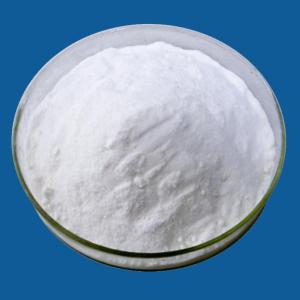
L-Cysteine S-Sulfate Na
Carboxylate Group (-COO^-) Reactivity of L-Cysteine S-Sulfate Na The carboxylate group is in a deprotonated state in neutral and alkaline solutions, and its reactivity is relatively weak, but it can still participate in salt formation and esterification reactions under specific conditions.Salt exchange reaction: In aqueous solutions, it can react with divalent metal ions (e.g.,Ca^2+,Mg^2+) to form insoluble metal salts, which can be used for the separation and purification of the compound.Esterification reaction: In strongly acidic conditions (e.g., concentrated sulfuric acid as a catalyst), it reacts with alcohols (e.g., methanol, ethanol) to form corresponding esters. For example, reacting with methanol produces methyl L-cysteine S-sulfate, which has good solubility in organic solvents and can be used as an intermediate in organic synthesis.
Other supplier products
|
|
Cystine Disodium Salt |
Cystine Disodium Salt, as an ionic derivative of L-cystine, possesses a unique combination of physical and chemical properties that endow it with d... |
|
|
N-Acetyl-L-Tryptophan Supplier |
N‑Acetyl‑L‑Tryptophan as Regulatory Status (Summary)China: Approved as a food additive (flavor enhancer) and nutrient fortifier (GB 2760, GB 14880)... |
|
|
L-Cysteine S-Sulfate Na |
Hydrolysis Properties of L-Cysteine S-Sulfate NaThe functional groups in L-cysteine S-sulfate sodium salt are prone to hydrolysis under acidic or a... |
|
|
Phospho-L-Tyrosine Disodium Salt |
Storage Methods of Phospho-L-Tyrosine Disodium Salt For long-term storage (≥6 months), store the dry powder (≥98% HPLC purity) at -20℃ &plusm... |
|
|
N-Acetyl-L-Tryptophan |
N‑Acetyl‑L‑Tryptophan (NAT) is a stable, acetylated derivative of L‑tryptophan with neuroprotective, anti‑inflammatory, and antioxidant properties,... |
供应产品
Same products