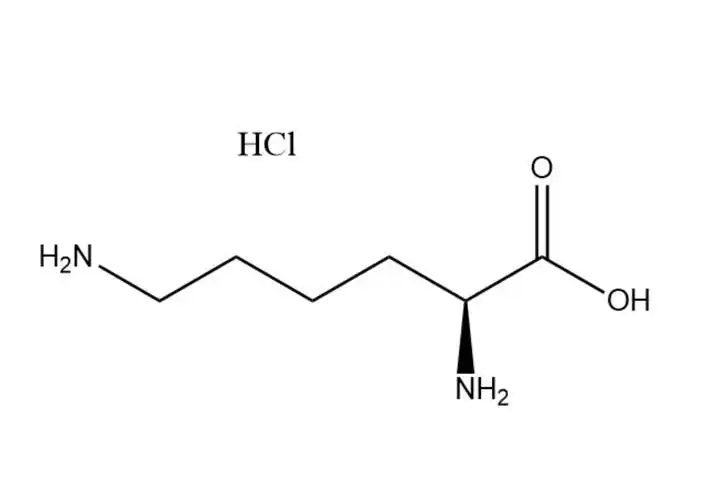
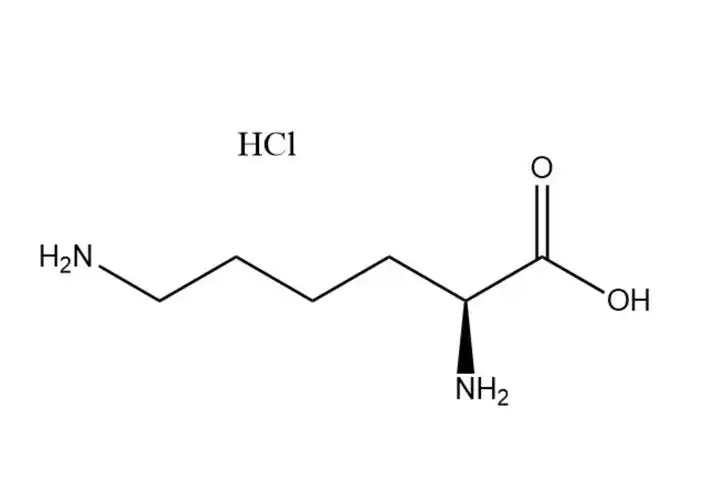
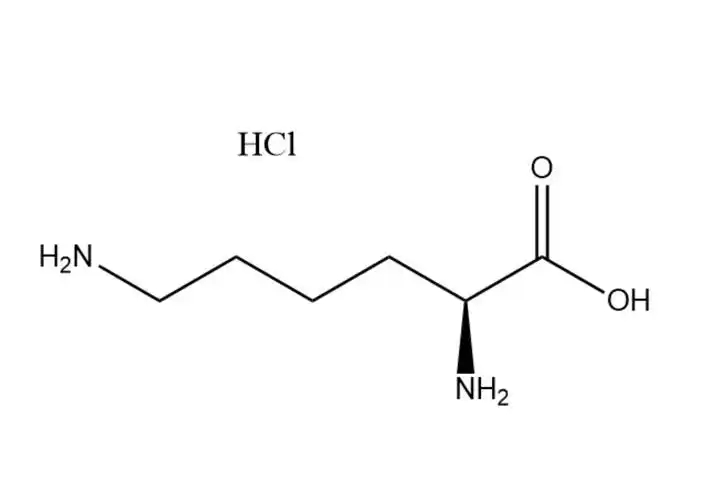
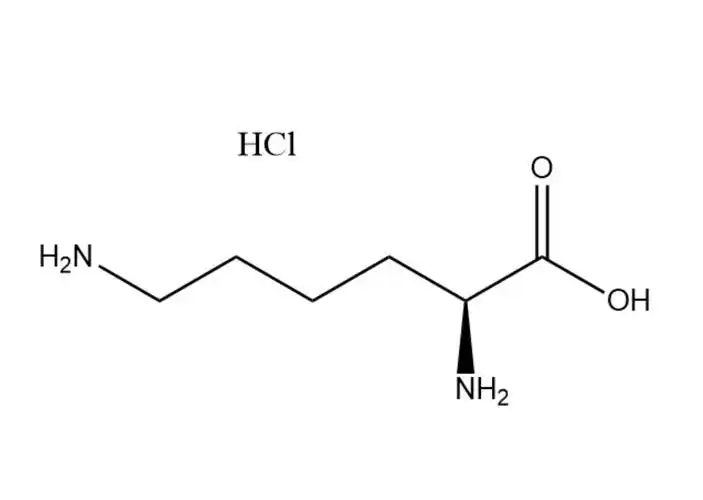
L-Lysine monohydrochloride as nutrient additives
Free L-lysine is highly hygroscopic—it absorbs atmospheric moisture rapidly at relative humidity (RH) >60%, leading to caking, agglomeration, and difficulty in handling/bulk storage. L-Lysine monohydrochloride, by contrast, is slightly hygroscopic: it only absorbs trace moisture at RH <80% and no significant hygroscopy at the standard industrial storage RH (50–70%). Its high crystallinity (orthorhombic crystal system) further prevents caking and agglomeration, even after long-term bulk storage or transportation. This advantage:
- Reduces storage and transportation costs (no need for special moisture-proof packaging for short-term storage).
- Ensures consistent flowability for industrial processing (e.g., feed pelleting, food fortification, pharmaceutical dry granulation), avoiding equipment blockage and uneven mixing.
- Maintains the physical form of solid formulations (tablets, capsules, premixes) without disintegration or stickiness during shelf life.
Other supplier products
|
|
L-Methionine |
Core Biological Functions of L-Methionine Protein Synthesis Precursor: As an essential amino acid, L-Methionine is a fundamental building block for... |
|
|
Inositol |
Inositol is widely applied in beverages, cereal products, nutritional meal replacements and protein solid drinks as a high‑safety nutritional forti... |
|
|
Sucralose |
Sucralose is a white powder product that readily dissolves in water, ethanol, and methanol. It is currently the only functional sweetener produced ... |
|
|
L-Methionine powder |
L-Methionine is an essential sulfur-containing amino acid that plays irreplaceable roles in protein synthesis, metabolic regulation, and physiologi... |
|
|
L-Threonine |
While not a primary preservative, L-threonine can: Improve the stability of proteins and enzymes in processed foods, reducing degradation. Act as a... |
供应产品
Same products