

Large Cone Calorimeter with Variable Atmosphere,Cone calorimeter for fire safety testing

Whats/App: +86 156 1874 6768
Web: standard-groups.com
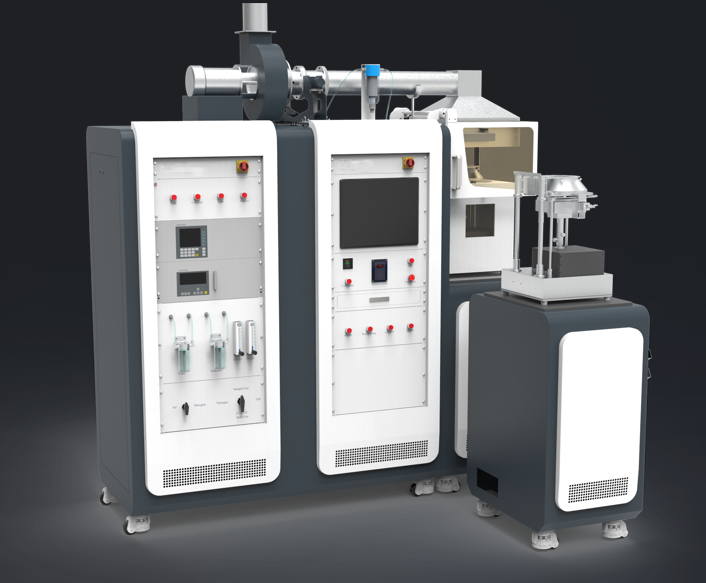
The Large Cone Calorimeter with Variable Atmosphere is designed to measure the heat release rate of materials based on the oxygen consumption principle. You can accurately determine material combustibility, ignition time, mass loss rate, and derived data such as effective heat of combustion and specific extinction area. During testing, samples are placed on a loading unit, heated, and ignited with an electric spark. Combustion gases are collected through exhaust and adsorption ducts, and parameters such as gas concentration, pressure, temperature, and smoke density are automatically recorded. This instrument provides a safe, fast, and reliable method for material development, fire research, and quality control.
Application
You can apply this apparatus in the following scenarios:
Material development: Evaluate thermal and combustion properties of building, decorative, or industrial materials.
Fire safety research: Study heat release, smoke generation, and flame propagation under controlled atmospheres.
Quality control: Monitor material performance to ensure compliance with fire safety standards.
Automotive and transportation: Assess heat release and smoke production of interior materials under varying atmospheric conditions.
Compatible test components: Loading unit, electric spark ignition system, exhaust and adsorption ducts, optical smoke measurement system, mass balance, data acquisition and processing software.
Standards
This apparatus conforms to the following international and national standards:
GB/T 16172‑2007 — Determination of heat release rate and total heat release of building materials and products (Cone Calorimeter Method)
ISO 5660‑1 — Heat release, smoke production, and mass loss measurement for building materials (Cone Calorimeter Method, Part 1)
ISO 5660‑2 — Heat release, smoke production, and mass loss measurement (Part 2: Flame spread testing)
ISO 5660‑4 — Heat release and smoke generation test for automotive interior materials
ISO 5660‑5 — Heat release, smoke production, and mass loss measurement: Additional assessment requirements
ASTM E1354 — Cone calorimeter method for heat release rate and visible smoke release
ASTM E2965 — Guidelines for assessing material combustibility using oxygen consumption
Parameters
| Parameter | Specification |
|---|---|
| Dimensions | 2135 × 915 × 2810 mm |
| Weight | 650 kg |
| Mass Balance Range | 6000 g, resolution 0.01 g |
| Gas Analysis | German Siemens analyzer, high precision |
| Exhaust System | Condensation-type smoke treatment with triple filtration |
| Material Handling | Sample loading unit with automated placement |
| Software | Integrated data acquisition and analysis system |
| Operating Gas | Compressed air |
| Calibration Gases | Methane, N2. CO2/CO mixed gas |
| Power Requirement | 220V / 380V, 50 Amps |
| Operating Temperature | 10–35°C |
Features
Integrated computer and acquisition system: Streamlines data collection and analysis.
Durable stainless steel housing: Ensures long-term stability and corrosion resistance.
Triple filtration system: Effectively cleans exhaust gases and protects sensors.
High-resolution mass balance: Measures sample mass loss accurately with 0.01 g resolution.
High-precision gas analysis: Siemens analyzer provides reliable measurement of combustion gases.
Condensation-type smoke treatment: Efficiently collects and condenses combustion gases.
User-friendly operation: No need to manually remove or insert optical filters during testing.
Robust main filter: Stainless steel housing ensures durability and easy maintenance.
Accessories
Loading unit with automated sample placement
Electric spark ignition system
Condensation and exhaust duct system with triple filtration
Optical smoke measurement system
High-precision mass balance
Gas analysis system (Siemens analyzer)
Data acquisition and integrated software system
Calibration gases: Methane, N2. CO2/CO mixture
Test Procedures
Install the sample on the loading unit and ensure proper positioning.
Connect compressed air and calibration gas supplies.
Set the cone heater to the desired heat flux and ignite the sample using the electric spark system.
Measure mass loss, gas concentration, temperature, and smoke density during combustion.
Data is automatically recorded and processed to calculate heat release rate, effective heat of combustion, and derived parameters.
After testing, safely remove the sample and perform routine cleaning of the exhaust and measurement systems.
Maintenance Information
Clean the cone heater, exhaust ducts, and filters regularly to maintain measurement accuracy.
Calibrate the mass balance, gas analyzers, and optical smoke measurement system periodically.
Inspect the sample loading unit and ignition system before each test.
Ensure the exhaust system and filtration components are unobstructed.
Maintain ambient temperature between 10–35°C and verify gas supply pressures before operation.
在线联系供应商
Other supplier products
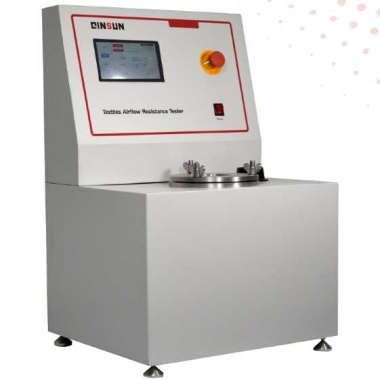 |
Face Mask Airflow Resistance Measurement tester | Whats/App: +86 156 1874 6768 Web: standard-groups.com Standards: GB19083-2010 technical requirements for medical protective masks Applications:... |
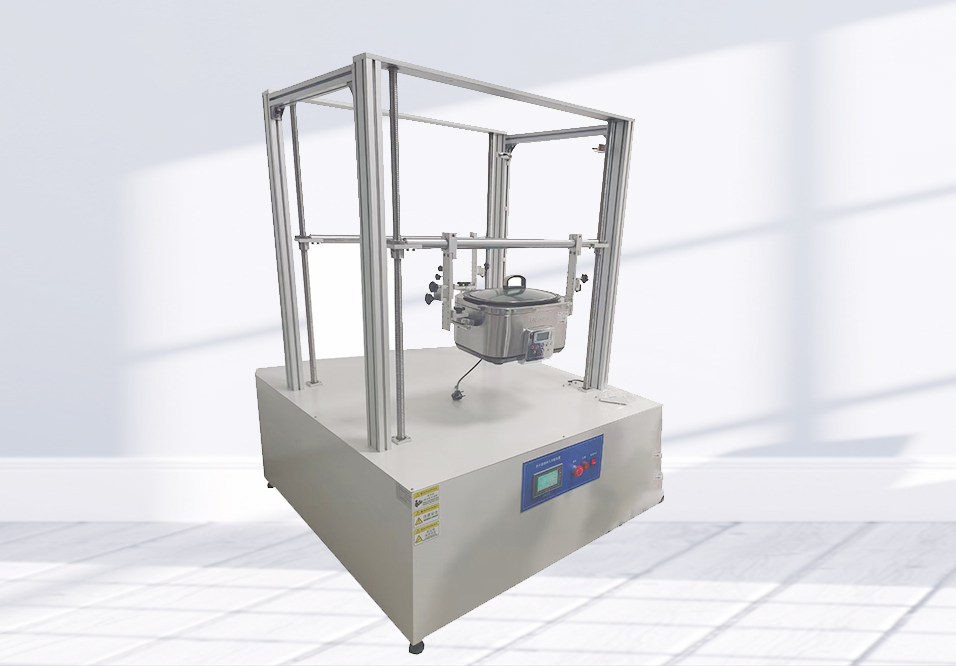 |
Cookware Handle Tensile Tester | Whats/App: +86 156 1874 6768 Web: standard-groups.com TheHandle Strength and Durability Testing Deviceis designed to evaluate the service life an... |
 |
Catheter Sliding Performance Tester | Whats/App: +86 156 1874 6768 Web: standard-groups.com Standards YY/T 1536 - 2017 GB/T, ASTM, etc. Main Uses The catheter sliding performance ... |
 |
Bending Tester STD- FB2 - S | Whats/App: +86 156 1874 6768 Web: standard-groups.com Compliance Standards ASTM D790 (Plastics Flexural Properties) ISO 178 (Flexural Strength ... |
 |
Wear Track Profilometer | Whats/App: +86 156 1874 6768 Web: standard-groups.com A wear profiler is a device used to measure the characteristics of worn surfaces, providing... |
Same products
 |
HDPE高速水冷双壁波纹管生产线 | 卖方: Shandong HUASU Plastic Technology Co.,Ltd. | 机头模具采用双流道结构、氮化磨光处理机头,偏壁调整方便快捷,保证内外层壁厚均匀和稳定成型。 最新设计密闭压力水冷冷却结构,冷却充分,多点分布真空系统,效率更高,生产速度更快。 双层在线扩口功... |
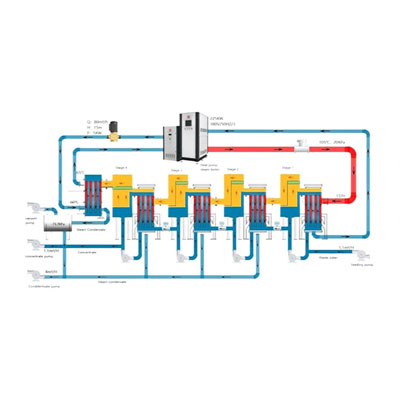 |
PanEVAP & MVR system | 卖方: Yangzhou Panstar Heat Exchanger Equipment Co., Ltd | A multiple-effect evaporator is a device that efficiently uses steam heat to evaporate water. Wat... |
 |
PanGAP wide gap welded plate heat exchanger | 卖方: Yangzhou Panstar Heat Exchanger Equipment Co., Ltd | PanGAP wide gap welded plate heat exchangerconsists of a welded plate pack with different channel... |
 |
PanBloc welded plate heat exchanger | 卖方: Yangzhou Panstar Heat Exchanger Equipment Co., Ltd | PanBloc welded plate heat exchangeris compact and efficient, although fully welded, is totally ac... |
 |
PanBox welded plate heat exchanger | 卖方: Yangzhou Panstar Heat Exchanger Equipment Co., Ltd | PanBox welded plate heat exchangerconsists of a laser welded plate pack with optimized corrugated... |

