

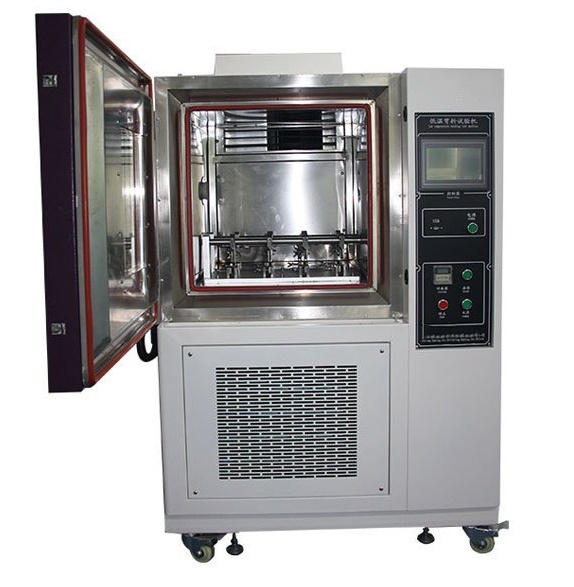
leather crack resistance tester at low temperature

Whats/App: +86 156 1874 6768
Web: standard-groups.com
Applications
Leather Low-Temperature Flexing Tester is used to evaluate the cold resistance and flexing durability of leather and leather-coated materials, assessing their suitability for low-temperature climates or cold regions. Constructed entirely of stainless steel, this machine can be fitted with various fixtures to accommodate different testing requirements.
Standards
QB/T 2714-2018 Leather - Physical and Mechanical Tests - Determination of Flexing Resistance
GB/T 20991:Personal Protective Equipment — Safety Footwear
JIS K6545 Specification for Testing Flexing Resistance (or Flexing Strength) of Leather
ISO 20344:Personal Protective Equipment — Test Methods for Footwear
ASTM D1790:Standard Test Method for Brittleness Temperature of Plastic Materials by Impact
ASTM D1593:Standard Test Method for Resistance to Impact of Plastic Film by the Falling Dart Method
ASTM D1052:Standard Test Method for Measuring Rubber Deterioration — Cut Growth Using Ross Flexing Apparatus
CNS 7705:Footwear — Test Method for Abrasion Resistance of Outsole Materials
Accessories
Main Unit: 1 unit
Flexing Fixture: 1 set
Chinese Instrument Manual: 1 copy
Instrument Warranty Card: 1 copy
Upper Material Low-Temperature Flexing Test Piece: 70×65mm
Product Certificate of Conformity: 1 sheet
Laser Engraving Die Cutter: 1 piece
Product Operation Manual: 1 copy
Delivery Note: 1 sheet
Acceptance Note: 1 sheet
Test Procedures
1. Equipment Preparation
Installation and Calibration: Position the testing machine on a level, stable workbench to ensure no wobbling. Connect the power supply and verify electrical connection. Install the bending die, adjust the fixture position to align with the power output center, and set appropriate clamping force based on specimen thickness.
Environmental Check: Confirm the laboratory environment meets standard test conditions (e.g., temperature, humidity) to prevent external factors from interfering with test results.
2. Specimen Preparation
Cutting and Inspection: Cut specimens according to standards (e.g., ASTM D1790 or QB/T 2714), typically sized 70mm × 45mm or 70mm × 25mm. Inspect edges for neatness, ensuring no notches or cracks, and verify the weathering surface shows no significant defects.
Folding and Securing: Fold the sample 180° with the weathered surface facing outward, aligning edges flush. Secure with clamps or tape to prevent misalignment.
3. Parameter Settings
Temperature Setting: Configure the low-temperature chamber based on material properties (e.g., standard leather or cold-resistant specialty materials). Range typically spans -30°C to -50°C with ±0.5°C temperature control accuracy.
Bending Parameters: Set the bending angle (e.g., 22.5° ± 0.5°) and speed (100 ± 5 cycles/minute) to comply with test standards (e.g., ASTM D813 or ISO 132).
4. Test Execution
Pre-cooling Treatment: Place the specimen and fixture into the low-temperature chamber. Maintain at the set temperature for 1-2 hours to ensure uniform specimen temperature.
Initiate Test: Within 1 second, press the upper plate of the flexing machine to the preset gap. Hold for 1 second before removing the specimen. Start the testing machine and monitor its operation to ensure temperature, speed, and angle align with settings.
Process Monitoring: Continuously check instrument displays. Immediately halt the machine and investigate if temperature anomalies or flexing deviations occur.
5. Result Evaluation
Recovery and Inspection: After the specimen returns to room temperature, examine the bending area with a magnifying glass. Document any cracks, delamination, or fractures. Results are graded as “No Cracks” or “Number of Bends at Crack Occurrence.”
Data Recording: Meticulously log test parameters and defect types for material performance assessment.
在线联系供应商
Other supplier products
 |
Automotive Wire Marking Durability Tester | Whats/App: +86 156 1874 6768 Web: standard-groups.com The Automotive Wire Marking Durability Tester is designed to evaluate the durability and ad... |
 |
Automatic ring-on-block wear testing equipment | Whats/App: +86 156 1874 6768 Web: standard-groups.com Application Sliding friction and wear performance evaluation of metallic materials. Wear ... |
 |
Electronic Crockmeter Rubbing Fastness Tester | Get a quote: Whats/App: +86 156 1874 6768 Web: standard-groups.com The G238AA Manual Rubbing Color Fastness Tester is the most commonly used mod... |
 |
FPC Flex Durability Tester | Whats/App: +86 156 1874 6768 Web: standard-groups.com The FPC Flex Durability Tester is designed to evaluate the bending durability and fatigue l... |
 |
ISO certified Sand - Falling Testing Machine for Motorcycle Helmets | Get a quote: Whats/App: +86 156 1874 6768 Web: standard-groups.com Application It is mainly used to test the abrasion - resistance of the lense... |
Same products
 |
ER4043 Silicon Aluminum Welding Wire | 卖方: 868776 | Hangzhou Kunli Welding Materials Co., Ltd. offers ER4043 Silicon Aluminum Welding Wire for alumin... |
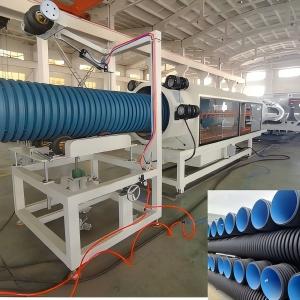 |
HDPE高速水冷双壁波纹管生产线 | 卖方: Shandong HUASU Plastic Technology Co.,Ltd. | 机头模具采用双流道结构、氮化磨光处理机头,偏壁调整方便快捷,保证内外层壁厚均匀和稳定成型。 最新设计密闭压力水冷冷却结构,冷却充分,多点分布真空系统,效率更高,生产速度更快。 双层在线扩口功... |
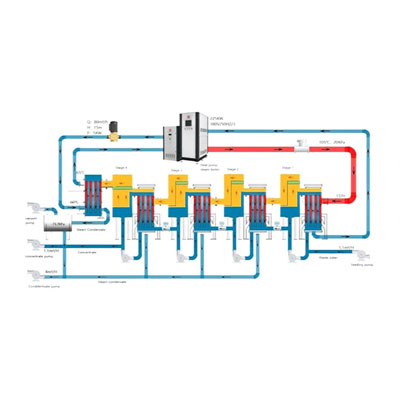 |
PanEVAP & MVR system | 卖方: Yangzhou Panstar Heat Exchanger Equipment Co., Ltd | A multiple-effect evaporator is a device that efficiently uses steam heat to evaporate water. Wat... |
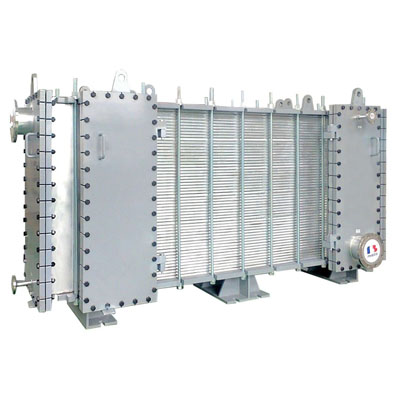 |
PanGAP wide gap welded plate heat exchanger | 卖方: Yangzhou Panstar Heat Exchanger Equipment Co., Ltd | PanGAP wide gap welded plate heat exchangerconsists of a welded plate pack with different channel... |
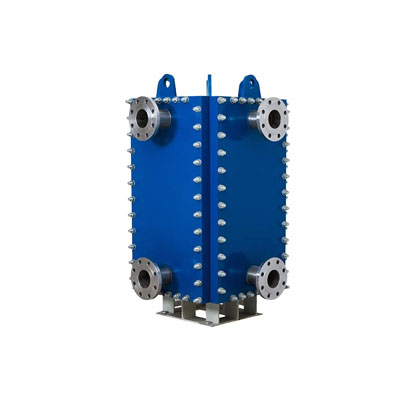 |
PanBloc welded plate heat exchanger | 卖方: Yangzhou Panstar Heat Exchanger Equipment Co., Ltd | PanBloc welded plate heat exchangeris compact and efficient, although fully welded, is totally ac... |

