

Fiber Crimp Elasticity Tester

Whats/App: +86 156 1874 6768
Web: standard-groups.com
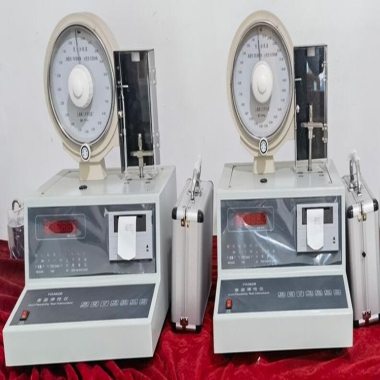
The Fiber Crimp Elasticity Tester is a specialized instrument designed to measure the crimp degree, crimp elasticity, and crimp recovery rate of fibers with linear densities from 1 to 22 dtex. It is widely used in fiber research, production, and quality inspection departments to evaluate both natural and chemical fibers, providing accurate and repeatable measurements for fiber performance analysis and process optimization.
Application
(1) Testing crimp degree and crimp recovery rate of synthetic fibers such as polyester, nylon, acrylic, and rayon.
(2) Evaluating natural fibers including cotton, wool, and blended fibers for crimp elasticity.
(3) Fiber research and development in textile laboratories and nonwoven material production.
(4) Quality control in fiber spinning, carding, and finishing processes.
(5) Comparative studies of crimp performance for recycled or blended fibers.
(6) Assessment of fibers used in technical textiles for automotive, medical, and smart textile applications.
(7) Education and training purposes in fiber science and textile engineering programs.
Standards
(1) GB/T 14338-2008: Test method for crimp and crimp elasticity of staple fibers.
(2) GB/T 14338-2022: Updated national standard for crimp performance of man-made staple fibers.
(3) ISO 2060: Determination of fiber fineness by electrical or physical methods (applied analogously).
(4) ASTM D885: Standard test methods for crimp characteristics of textile fibers.
(5) EN 1269-1: Test methods for staple fibers—crimp characterization and recovery rate measurement.
(6) JIS L 1013: Methods for evaluating crimp and elasticity of textile fibers.
Features
(1) Standard Compliance: Fully adheres to national and international standards for fiber crimp testing.
(2) Broad Applicability: Supports fibers with linear densities from 1 to 22 dtex, including natural and chemical fibers.
(3) Versatile Tension Loading: Multiple tension ranges (0–5 mN, 0–10 mN, 0–25 mN) with fine minimum divisions for precision control.
(4) High Measurement Resolution: Displacement resolution of 0.01 mm ensures accurate measurement of fiber elongation.
(5) Automated Testing: Automatic timing with selectable durations of 30s, 60s, and 120s for consistent results.
(6) Clear Observation: Equipped with LED lighting to facilitate monitoring of the fiber sample during testing.
(7) Comprehensive Analysis: Measures crimp degree, crimp elasticity, and crimp recovery rate.
(8) Supports Key Departments: Essential for fiber research, production, and inspection laboratories.
Parameters
| Parameter | Specification |
|---|---|
| Tension loader range | 0–5.00 mN (min division 0.01 mN), 0–10.00 mN (min division 0.02 mN), 0–25.00 mN (min division 0.05 mN) |
| Initial length | 20 mm |
| Lower clamp stroke | ≤30 mm |
| Displacement resolution | 0.01 mm |
| Timing | Automatic, selectable: 30s, 60s, 120s |
| Lighting | LED lights |
| Crimp count length | 25 mm |
| Power supply | AC 220V, 50 Hz |
Accessories
(1) Main unit
(2) Fiber clamps and tension loaders
(3) Sample holder
(4) LED observation lamp
(5) Power cable
(6) User manual
Test Procedures
(1) Prepare the instrument and connect the power supply.
(2) Mount the fiber sample in the upper and lower clamps according to the required initial length.
(3) Select the appropriate tension loader range and test timing.
(4) Start the test; the instrument applies tension and records displacement.
(5) Observe the fiber under LED lighting to confirm proper measurement.
(6) Read and record the crimp degree, crimp elasticity, and crimp recovery rate.
(7) Remove the sample and clean the clamps after testing.
Maintenance Information
(1) Keep the clamps and tension loading components clean to prevent measurement errors.
(2) Check the LED lighting and replace bulbs as necessary.
(3) Verify timing and tension accuracy periodically using calibration fibers.
(4) Avoid exposure to moisture, dust, or corrosive substances.
(5) Store the instrument in a stable laboratory environment with controlled temperature and humidity.
(6) Inspect mechanical components regularly for wear and lubricate moving parts as recommended.
在线联系供应商
Other supplier products
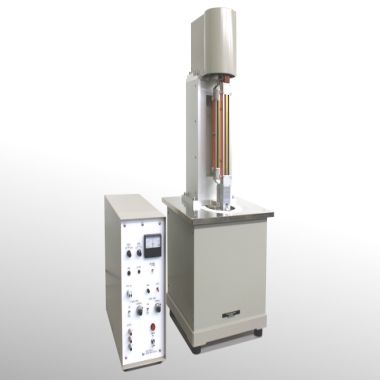 |
Large - Scale Bending Tester STD - FB2 - L | Whats/App: +86 156 1874 6768 Web: standard-groups.com TheLarge Bending Tester accurately and quickly measures factors related to curvatures in sm... |
 |
Zipper Tester for Textile Industry | Whats/App: +86 156 1874 6768 Web: standard-groups.com Zipper Smoothness Tester: This zipper testing instrument is used to test the smoothness of ... |
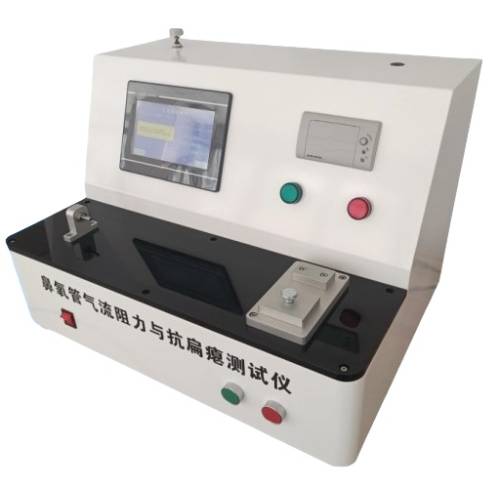 |
Nasal Oxygen Cannula Tester | Whats/App: +86 156 1874 6768 Web: standard-groups.com Applications The nasal oxygen tube tester is mainly used to test key parameters of nasal o... |
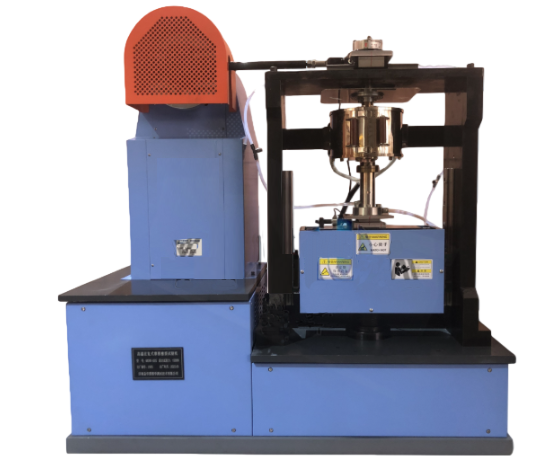 |
Heavy-duty reciprocating friction and wear testing | Whats/App: +86 156 1874 6768 Web: standard-groups.com Application Materials testing: metals, ceramics, coatings, plastics, rubber, and other mat... |
 |
UV Accelerated Weathering Tester | Whats/App: +86 156 1874 6768 Web: standard-groups.com Overview: UV light is responsible for almost all photodegradation of durable materials exp... |
Same products
 |
Full-Body Garment Stress Tester,FZ/T 70015 | 卖方: Standard International Group (HK) Limited | Whats/App: +86 156 1874 6768 Web: standard-groups.com TheFull-Body Garment Stress Testeris a pr... |
 |
Industrial Dry Cleaning Machine,industrial garment steamer | 卖方: Standard International Group (HK) Limited | Whats/App: +86 156 1874 6768 Web: standard-groups.com TheIndustrial Dry Cleaning and Energy-Sav... |
 |
MST Medical Compression Stocking Tester,compression sock tester | 卖方: Standard International Group (HK) Limited | Whats/App: +86 156 1874 6768 Web: standard-groups.com The MST Medical Compression Stocking Test... |
 |
MMT Liquid Water Separation Tester,MMT Liquid Water Analysis Tool | 卖方: Standard International Group (HK) Limited | Whats/App: +86 156 1874 6768 Web: standard-groups.com Applications Textile Manufacturing:Testi... |
 |
Dental material color stability tester | 卖方: Standard International Group (HK) Limited | Whats/App: +86 156 1874 6768 Web: standard-groups.com Application The applications of color st... |

