

Cell thickness gauge

Whats/App: +86 156 1874 6768
Web: standard-groups.com
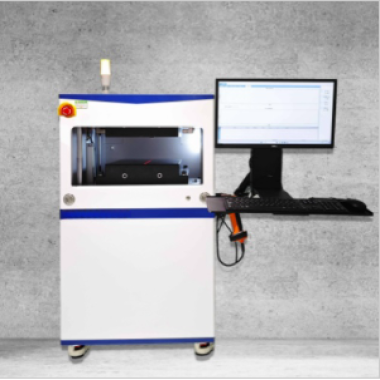
The Cell Thickness Gauge is a precision measuring instrument designed for accurate thickness measurement of lithium-ion battery cells. The system is used to evaluate dimensional consistency and thickness variation of pouch cells, cylindrical cells, coin cells, and laminated battery structures during research, production, and quality control processes. It provides reliable micron-level thickness data to support battery performance analysis, safety evaluation, and process optimization.
Application
(1) Thickness measurement of lithium-ion pouch cells, cylindrical cells, and coin cells.
(2) Dimensional consistency inspection during cell production and assembly.
(3) Thickness comparison before and after cycling, formation, or aging tests.
(4) Evaluation of lamination quality and stack uniformity in battery electrodes.
(5) Incoming inspection and batch quality control of battery cells.
(6) Laboratory research and process verification for battery development.
Standards
(1) ASTM E83 – Standard Test Method for Verification of Linear Displacement Measuring Systems.
(2) ISO 3611 – Calibration of Measuring Instruments – Verification of Linear Measuring Instruments.
(3) IEC 62660-2 – Secondary Lithium-Ion Cells – Reliability and Abuse Testing (reference application).
(4) RoHS – Restriction of Hazardous Substances Directive.
(5) CE Certification – Conformité Européenne.
Features
(1) High-resolution thickness measurement suitable for battery cells and stacked structures.
(2) Non-contact laser displacement sensor reduces mechanical influence on samples.
(3) High-speed scanning for efficient batch measurement.
(4) Adjustable measuring force to accommodate delicate or solid-state battery structures.
(5) Stable mechanical frame ensures repeatable measurement results.
(6) Integrated data acquisition and digital display system.
(7) Automatic calibration compensation for long-term measurement stability.
(8) Safety protection with emergency stop and electrical safeguards.
Technical Parameters
| Parameter | Specification |
|---|---|
| Measurement Range | 0 – 50 mm |
| Resolution | 0.1 μm |
| Measurement Accuracy | ±0.5 μm |
| Repeatability | ±0.2 μm |
| Scan Speed | Up to 50 mm/s |
| Data Acquisition Rate | 10,000 points/second |
| Sensor Type | Laser displacement sensor |
| Power Supply | AC 100–240 V, 50/60 Hz |
| Dimensions (W×D×H) | 300 × 250 × 400 mm |
| Weight | 15 kg (net) / 18 kg (gross) |
Accessories
(1) Non-magnetic measurement anvils (flat, spherical, cylindrical).
(2) Calibration foils for thickness verification.
(3) Laser sensor and optical cleaning tools.
(4) Data acquisition and analysis software.
(5) NIST-traceable gauge blocks for calibration.
(6) Power cables and grounding components.
(7) Operation and maintenance documentation.
Test Procedure
(1) Power on the instrument and perform system initialization.
(2) Calibrate the gauge using certified gauge blocks or calibration foils.
(3) Place the battery cell on the measurement platform.
(4) Adjust the measuring force and sensor position as required.
(5) Start thickness measurement and record real-time data.
(6) Save or export measurement results for analysis and reporting.
Maintenance
(1) Clean the measurement platform and optical components regularly.
(2) Verify calibration accuracy at scheduled intervals.
(3) Inspect sensor alignment and mechanical stability periodically.
(4) Avoid contamination of optical components by dust or electrolyte residues.
(5) Store the instrument in a clean and temperature-controlled environment.
在线联系供应商
Other supplier products
 |
Wire Reciprocating Swing Bending Tester | Get a quote: Whats/App: +86 156 1874 6768 Web: standard-groups.com The Wire Swing Bending Tester is designed to simulate bending and swinging co... |
 |
Coating Abrasion and Scratch Testing Machine ASTM D5178 | Get a quote: Whats/App: +86 156 1874 6768 Web: standard-groups.com Application Evaluate scratch resistance and surface durability of paints, va... |
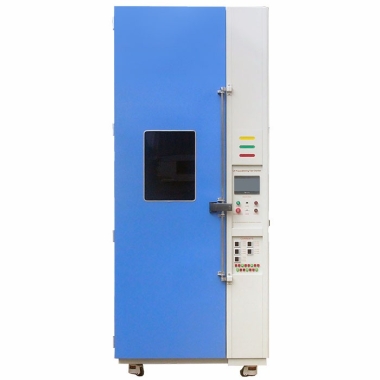 |
Solar Climatic Test Chamber 丨Solar Climatic Test mechine | Whats/App: +86 156 1874 6768 Web: standard-groups.com Features and Benefits 1. Fully Compliant with IEC 61215 Specifically designed for the UV ... |
 |
Automatic Transient Hot Wire Thermal Conductivity Testing Equipment Supplier China | Get a quote: Whats/App: +86 156 1874 6768 Web: standard-groups.com Standards ASTM D5334-2008 – Standard Test Method for Determination of ... |
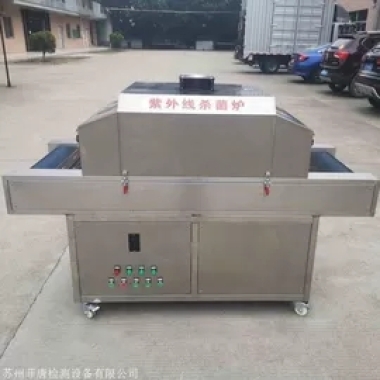 |
UV Sterilizer | Whats/App: +86 156 1874 6768 Web: standard-groups.com Product introduction of Environmental test chamber Ultraviolet disinfection technology is ... |
Same products
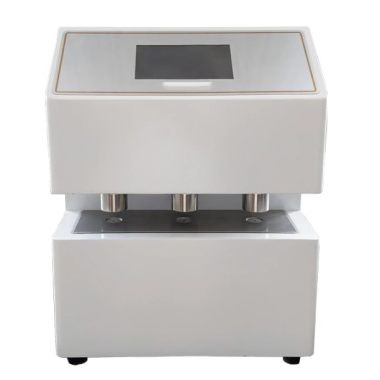 |
Battery Diaphragm Gas Permeability Tester ISO | 卖方: Standard Groups | Get a quote: Whats/App: +86 185 0176 3615 Web: qinsun-lab.com The Battery Diaphragm Gas Permea... |
 |
Torsion Testing Tester ASTM, JIS, and DIN | 卖方: Standard Groups | Get a quote: Whats/App: +86 185 0176 3615 Web: qinsun-lab.com The Universal Torsion Testing Ma... |
 |
Wire Torsion and Winding Tester ASTM and JIS | 卖方: Standard Groups | Get a quote: Whats/App: +86 185 0176 3615 Web: qinsun-lab.com The Wire Torsion and Winding Tes... |
 |
Metal Wire Repeated Bending Tester ISO/DIS 7801 | 卖方: Standard Groups | Get a quote: Whats/App: +86 185 0176 3615 Web: qinsun-lab.com The Metal Wire Repeated Bending ... |
 |
Metal Wire Wrap Tester ISO 4101 | 卖方: Standard Groups | Get a quote: Whats/App: +86 185 0176 3615 Web: qinsun-lab.com The Metal Wire Wrap Tester is de... |

