

PV Hail Impact Tester

Whats/App: +86 156 1874 6768
Web: standard-groups.com
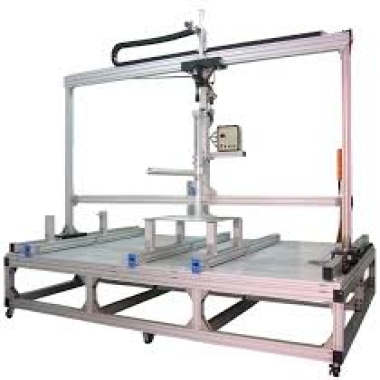
The PV Hail Impact Tester is a precision instrument designed to evaluate the mechanical resilience of photovoltaic modules under simulated hail impact conditions. It delivers controlled and repeatable impact energies to assess module durability, ensuring compliance with international IEC, UL, and ASTM standards. The system supports both laboratory testing and quality control in production lines, providing high-speed imaging and automated data logging for comprehensive performance analysis.
Application
The tester is suitable for:
Quality control of photovoltaic modules during production.
R&D for new PV module designs and materials.
Verification of hail resistance under extreme weather conditions.
Certification testing in compliance with IEC, UL, and ASTM standards.
Standards
IEC 61215: Mechanical load testing for terrestrial photovoltaic modules
UL 61730: Safety standards for photovoltaic modules under extreme weather conditions
ASTM E1886: Impact resistance testing for building envelopes (adapted for PV applications)
IEC TS 63057: Hail impact simulation protocols for concentrated solar power systems
Features
Precision Engineering: High-speed pneumatic system with ±2% accuracy delivers consistent impact energies.
Adjustable Simulation: Ice ball diameter adjustable from 25 mm to 75 mm to simulate diverse hail sizes.
Safety Assurance: Enclosed chamber with transparent polycarbonate shielding, emergency stop, and over-pressure protection.
User-Friendly Operation: 7” touchscreen HMI with multi-language support and pre-programmed test modes.
High-Speed Imaging: 1000 fps camera captures impact dynamics for post-test analysis.
Automated Control: Programmable ice ball trajectory (0°–90°) and real-time force, velocity, and deformation data logging.
Robust Construction: Stainless steel frame with anti-vibration mounts and low-noise operation (
Customizable: Optional environmental chamber (-40°C to +85°C) for temperature-dependent impact testing.
Parameters
| Parameter | Specification |
|---|---|
| Impact Energy Range | 0.5 J – 50 J (adjustable) |
| Ice Ball Diameter | 25 mm, 35 mm, 50 mm, 75 mm |
| Test Temperature Range | -40°C to +85°C (with optional environmental chamber) |
| Sample Size | Max. 2200 mm × 1400 mm (dual-station) |
| Power Supply | 220V/380V, 50/60Hz, 3-phase |
| Air Compressor Requirement | 0.6–0.8 MPa, 1.2 m³/min |
| Dimensions (L×W×H) | 3500 mm × 2000 mm × 2500 mm |
Accessories
Impact Materials: 100x ice balls (25 mm/35 mm/50 mm/75 mm mix)
Sample Clamping Kit: Adjustable for frameless or framed PV modules
Software Suite: Real-time data acquisition and analysis tool, report generator (PDF/Excel export)
Spare Parts Kit: 2x pneumatic nozzles, 5x O-rings, 1x calibration tool
User Manual: Multilingual printed and digital copy
Test Procedures
Install PV modules securely in the dual-station clamps.
Select ice ball size and impact energy through the touchscreen HMI.
Set test parameters, including trajectory angle (0°–90°) and optional environmental temperature.
Initiate the automated impact sequence.
Monitor high-speed camera footage and real-time data logging for force, velocity, and deformation.
Review test reports and export results for documentation or certification purposes.
Maintenance Information
Inspect ice ball launcher, pneumatic nozzles, and clamps before each test session.
Clean the testing chamber and polycarbonate shielding regularly to ensure visibility and safety.
Check and replace O-rings, pneumatic fittings, and ice balls as needed.
Ensure air compressor delivers stable pressure within 0.6–0.8 MPa.
Periodically calibrate sensors and high-speed imaging equipment according to manufacturer guidelines.
Send product request
Other supplier products
 |
Falling Sand Abrasion Test machine | Whats/App: +86 156 1874 6768 Web: standard-groups.com The sand abrasion tester is a specialized testing device used to evaluate the abrasion resi... |
 |
High Reliability Aircraft Wire Testing Equipment Manufacturer | Get a quote: Whats/App: +86 156 1874 6768 Web: standard-groups.com Features (1) Accurate sand belt length counter for precise abrasion measurem... |
 |
Syringe slide performance test device | Whats/App: +86 156 1874 6768 Web: standard-groups.com Introduction: 5.7-inch (120 x 90) single color LCD touch screen, Chinese menu display. T... |
 |
UV fade meter Si48 for textile testing | Get a quote: Whats/App: +86 156 1874 6768 Web: standard-groups.com UV Long-Life Auto Fade Meter is extensively used for colour fastness test of ... |
 |
Solid Auto-Ignition Point Tester | ASTM E659 Ignition Temperature Tester | Get a quote: Whats/App: +86 156 1874 6768 Web: standard-groups.com Standards It meets the requirements of GB/T 21756-2008 "Determination of Rel... |
Same products
 |
Battery Diaphragm Gas Permeability Tester ISO | Seller: Standard Groups | Get a quote: Whats/App: +86 185 0176 3615 Web: qinsun-lab.com The Battery Diaphragm Gas Permea... |
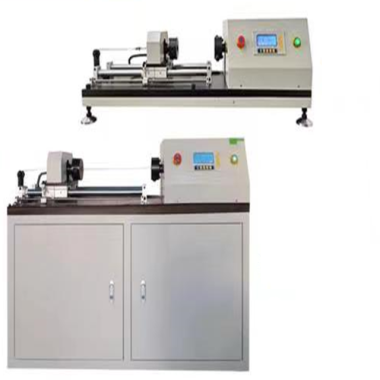 |
Torsion Testing Tester ASTM, JIS, and DIN | Seller: Standard Groups | Get a quote: Whats/App: +86 185 0176 3615 Web: qinsun-lab.com The Universal Torsion Testing Ma... |
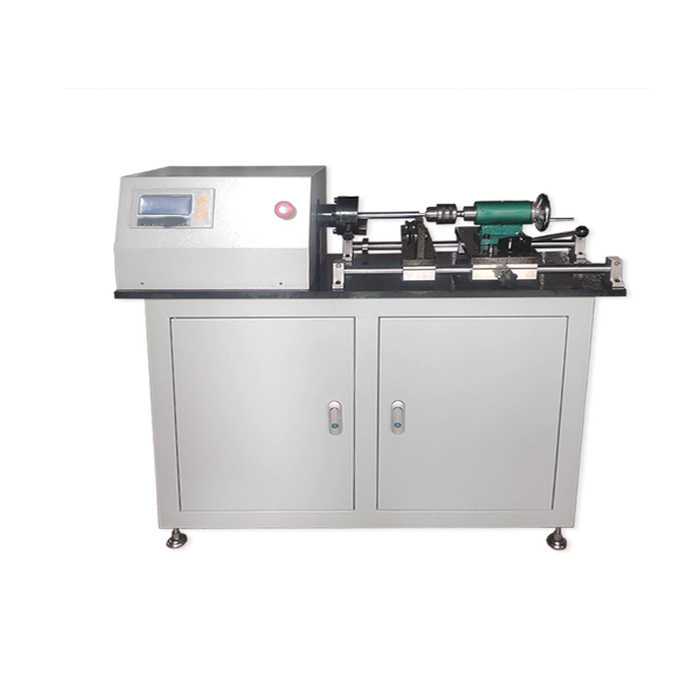 |
Wire Torsion and Winding Tester ASTM and JIS | Seller: Standard Groups | Get a quote: Whats/App: +86 185 0176 3615 Web: qinsun-lab.com The Wire Torsion and Winding Tes... |
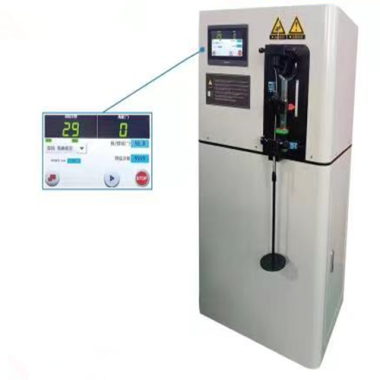 |
Metal Wire Repeated Bending Tester ISO/DIS 7801 | Seller: Standard Groups | Get a quote: Whats/App: +86 185 0176 3615 Web: qinsun-lab.com The Metal Wire Repeated Bending ... |
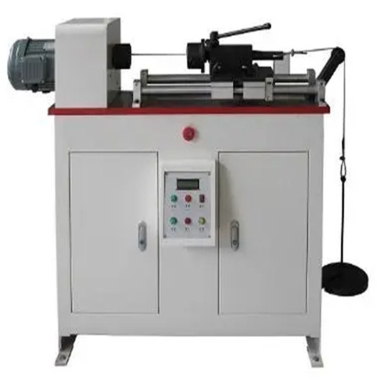 |
Metal Wire Wrap Tester ISO 4101 | Seller: Standard Groups | Get a quote: Whats/App: +86 185 0176 3615 Web: qinsun-lab.com The Metal Wire Wrap Tester is de... |

