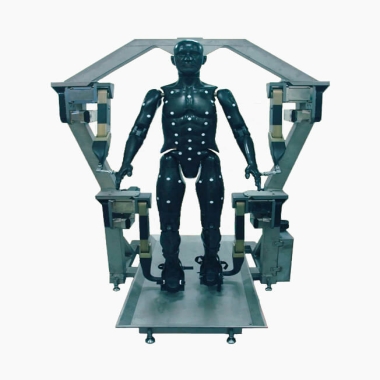
Sweating Thermal Manikin ASTM F 2371


Standards:
ASTM F 2371 – Standard Test Method for Measuring the Heat Removal Rate of Personal Cooling Systems Using a Sweating Heated Manikin
ASTM F 1720 – Standard Test Method for Measuring Thermal Insulation of Sleeping Bags Using a Heated Manikin
ASTM F 2732 – Standard Practice for Determining the Temperature Ratings for Cold Weather Protective Clothing
ISO 15831 – Clothing. Physiological Effects. Measurement of thermal insulation by means of a thermal manikin
EN 13537 – Requirements for Sleeping Bags
Product Advantages:
Comprehensive CB Testing: Designed specifically for evaluating the performance of CB protective clothing and equipment under conditions relevant to military operations.
Realistic Simulation: Combines realistic physical articulation and movement simulation with controlled heating and sweating to replicate human physiological responses during exertion.
Evaluates Barrier and Comfort: Allows for assessment of both the protective barrier integrity (via dosimeter ports) and the thermal comfort/physiological burden of the protective gear.
Chemically Resistant: Constructed with materials capable of withstanding exposure to chemical agents and decontamination procedures.
Dynamic Testing: Capable of performing a wide range of dynamic movements to assess garment performance under realistic stress.
Precise Control: Computer-controlled systems for heating, sweating, and motion ensure repeatable and accurate test conditions.
Integrated Data Collection: Includes built-in dosimeter ports for convenient and strategic placement of passive samplers.
High Sweat Rate: Capable of simulating high levels of perspiration during strenuous activity.
Developed for Defense: Commissioned by a defense research organization, reflecting its design for rigorous military applications.
Technical Parameters
| Sweating thermal manikins | Country of origin | Body materials | Number of body segments | Number of sweat glands | Sweating rate (g/m2/h) | Movability | Application area | Other features |
|---|---|---|---|---|---|---|---|---|
| “Coppelius” | Finland | Nonwoven inner layer and microporous outer layer | 18 | 187 | 0–200 | Walk at up to 4km/h | Under different temperature (−50 to +50ºC) and relative humidity (15–95%) | Available with different postures and digital data acquisition systems |
| “TARO” | Japan | Porous bronze | 1 | Not applicable | As perEq. (5.1) | Nonwalkable | Natural ambient environment of human beings | Available with digital data acquisition systems |
| “SAM” | Switzerland | Plastic | 26 | 125 | 0–41 | Walk at up to 3km/h | Under different temperature (−30 to +40ºC), relative humidity (20–90%), wind speed (0.2–40m/s) | Available with different postures and digital data acquisition systems |
| “Walter” | Hong Kong | Polytetra-fluroethylene Gortex membrane | Not applicable | Not applicable | Depends upon the type of the clothing is tested | Walk at up to 2.48km/h | Under different temperature (10–40ºC), relative humidity (30–80%), wind speed (0.3–5m/s) | Available with different postures and digital data acquisition systems |
| “ADAM” | United States | Porous metal | 126 | 120 | Depends upon the applied physiological thermoregulation model | Movable | Under transient and nonuniform thermal environments of automobiles, e.g., vehicles, aircrafts | Available with different postures of automobile drivers/riders and digital data acquisition systems |
| “KEM” | Japan | Porous material that is used in “Coppelius” | 17 | 17 | 0–1500 | Movable | Similar to “Coppelius” | Available with different postures and digital data acquisition systems |
| “Newton” | United States | Carbon-epoxy composite | 20. 26. or 34 | 134 | Depends upon the experimenters | Walk at up to 6km/h | Under different temperature (−20 to +50ºC) and relative humidity (0–100%) | Available with different postures, female body, and digital data acquisition systems |
Send product request
Other supplier products
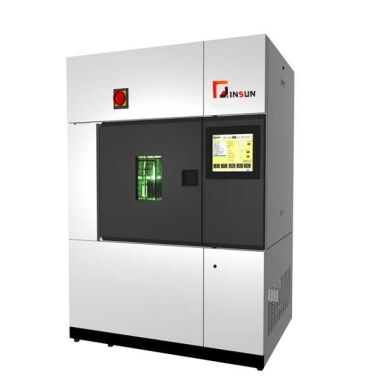 |
Qinsun Ci xenon lamp aging test chamber | The Ci Series Weather-Ometers are the most widely used rotating rack water-cooled xenon-arc weathering testing instruments in the world. Their larg... |
 |
Catheter Flexibility Tester | Compliance Standards YY/T 1554 - 2017. etc. ISO 10555 -Intravascular catheters- Sterile and single-use catheters ISO 11o70- Catheter introducers... |
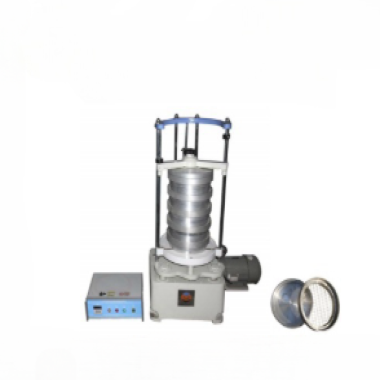 |
Geotextile Effective Aperture Tester丨Geotextile Test Machine | Scope of application: The equivalent pore diameter of geotextile and its related products was determined by dry screening method. The geotextile s... |
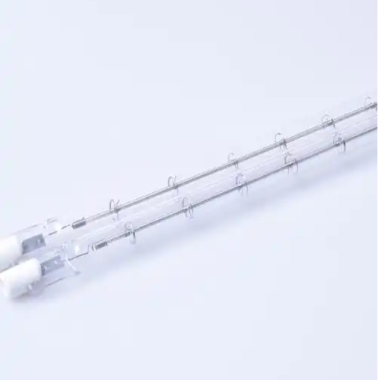 |
High-Power Lamp tube (1500W~12000W) | Applicable Standards High-power lamp tubes adhere to global safety and performance benchmarks, including: IEC 60598-1(Luminaires – Genera... |
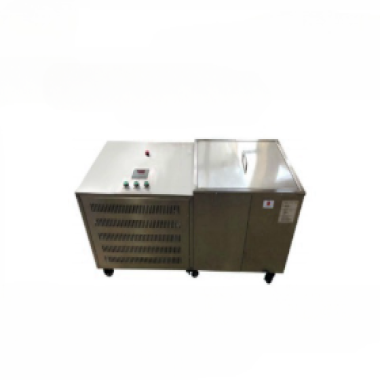 |
Thermostatic water tank tester丨Thermostatic water tank machine | Scope of application: Thermostatic water tank is widely used in drying, concentrating, distillation, impregnating chemical reagents, impregnating ... |
Same products
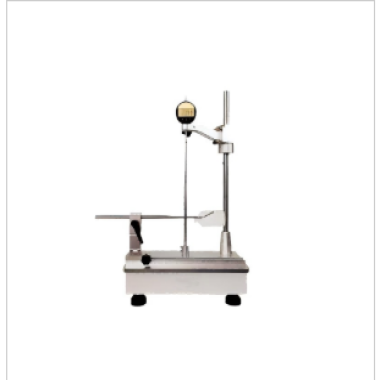 |
Bottle Wall and Bottom Thickness Tester | Seller: Standard International Group (HK) Limited | The wall and bottom thickness tester for bottles is a measuring instrument widely used in the pha... |
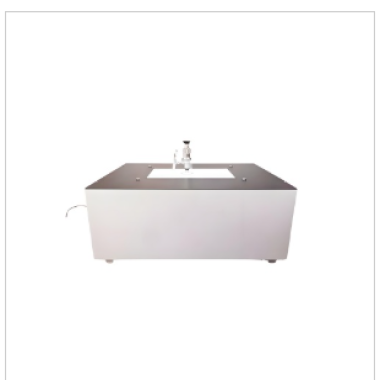 |
Pinhole Tester / Pinhole Testing Equipment | Seller: Standard International Group (HK) Limited | The pinhole tester for aluminum foil is a device specifically used to detect micro - pinholes in ... |
 |
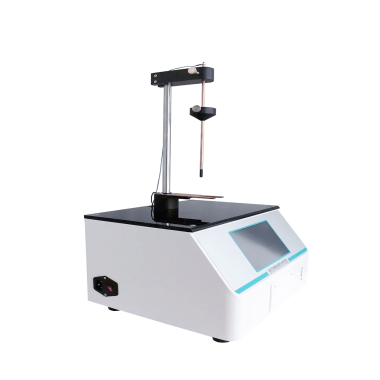
Cork Puncture and Chip Detection Instrument | Seller: Standard International Group (HK) Limited | The rubber stopper puncture debris detector is a device specifically used to detect the number of... |
 |
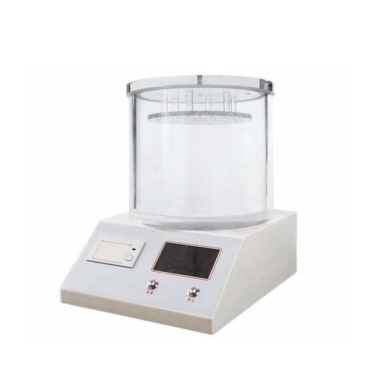
Aluminum Ointment Tube Toughness Tester | Seller: Standard International Group (HK) Limited | The ductility tester for aluminum tubes is a device specifically used to detect the ductility ind... |
 |
Vacuum leak tester / Vacuum leak instrument | Seller: Standard International Group (HK) Limited | Vacuum Decay Leak Tester specializes in the detection of leaks in ampoules, vials, injection bott... |