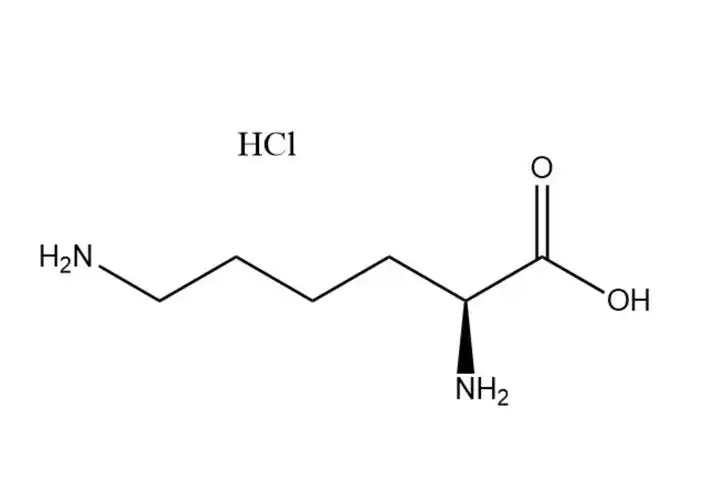
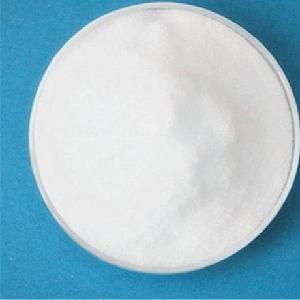
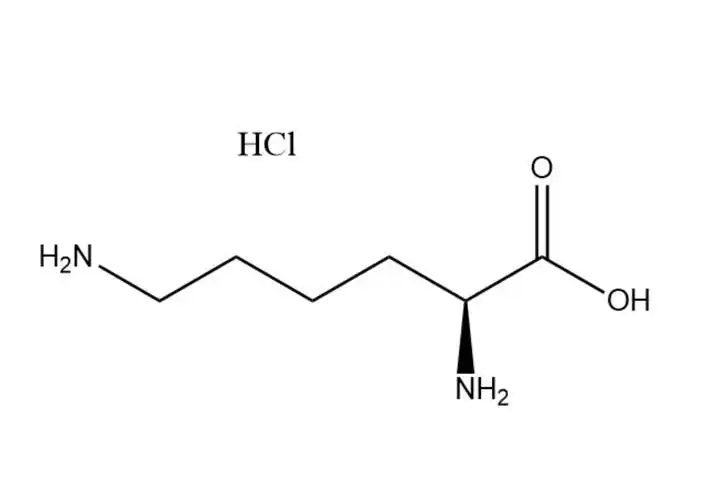
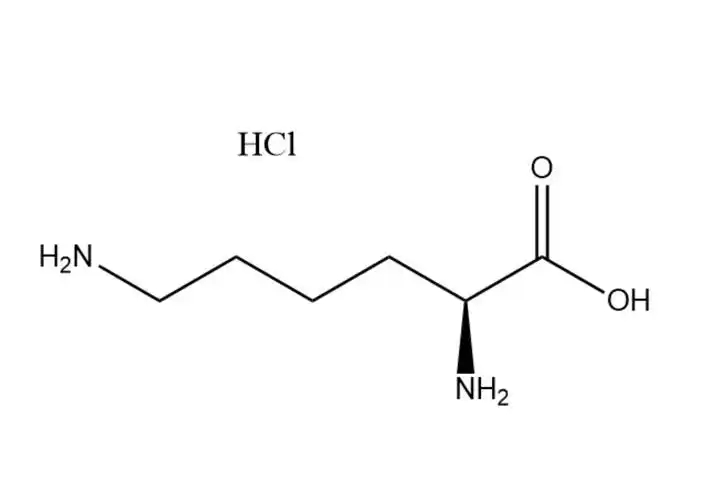
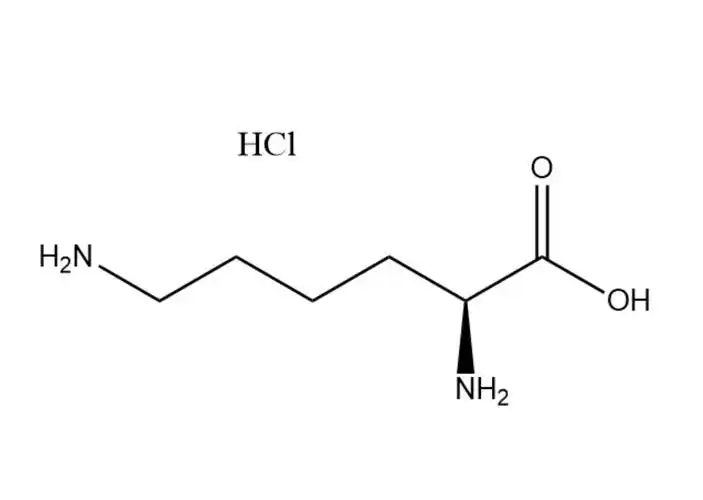
L-Lysine monohydrochloride
L-Lysine monohydrochloridehas a higher aqueous solubility than free L-lysine: ~70 g/100 mL at 25 °C (vs. ~63 g/100 mL for free L-lysine), with solubility increasing significantly with temperature (up to 110 g/100 mL at 60 °C). Its dissolution is rapid, endothermic, and free of precipitation in dilute to high-concentration aqueous solutions (up to 60% w/v). This advantage makes it ideal for:
- Liquid formulations (e.g., oral nutritional supplements, animal drinking water additives, pharmaceutical syrups) where high solubility and clear solutions are required.
- Industrial production processes (e.g., fermentation downstream purification, formulation blending) that demand fast dissolution and uniform dispersion in aqueous systems.
In contrast, free L-lysine has lower solubility and may form supersaturated solutions that precipitate during storage, leading to formulation instability.
Другие товары поставщика
|
|
L-proline |
The physiological functions and applications of L-proline1. Functions within living organismsCollagen synthesis: As the main component of collagen ... |
|
|
DL-methionine powder |
DL-Methionine has good biocompatibility and unique metabolic characteristics, making it a raw material for drug synthesis and a component of biomed... |
|
|
DL-methionine powder |
DL-Methionine is used in the food industry as a nutritional fortifier and processing aid, with applications focused on improving the nutritional qu... |
|
|
of Fish collagen peptides |
Properties of Fish collagen peptidesHigh Absorption Rate: Due to its small molecular weight, fish collagen peptides can be directly absorbed by the... |
|
|
DL-methionine powder |
DL-Methionine is the most widely used and largest-volume amino acid feed additive globally, playing an irreplaceable role in improving the nutritio... |
Все товары поставщика
Похожие товары