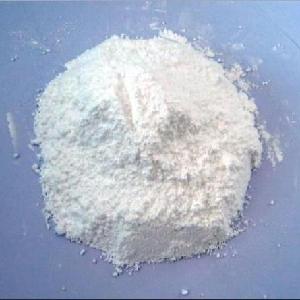
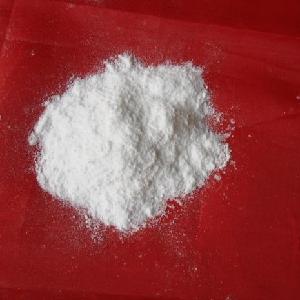
L-Cysteine hydrochloride monohydrate
Hygroscopic Properties of L-Cysteine hydrochloride monohydrate
L-Cysteine hydrochloride monohydrate readily forms hydrates or dissolves in absorbed water, altering its physical state and chemical stability.
Moisture absorption can also lead to pH changes or contamination if the environment contains pollutants.
Impact on Applications
Pharmaceutical/ Food Grade: Excess moisture may compromise product safety (e.g., microbial risks) or efficacy (e.g., reduced antioxidant activity).
Laboratory/Industrial Use: Moisture can affect the accuracy of formulations or reaction yields.
Other supplier products
|
|
Inositol as an important nutritional fortifier in food |
Inositol is used as an important nutritional fortifier in food. As a natural vitamin‑like nutrient, it can supplement daily physiological nutrients... |
|
|
Glycine |
In the field of medicine and health, glycine is an important raw material drug, drug intermediate, and nutritional supplement. It can be directly u... |
|
|
L-Cysteine hydrochloride monohydrate |
Hygroscopic Properties of L-Cysteine hydrochloride monohydrateL-Cysteine hydrochloride monohydrate readily forms hydrates or dissolves in absorbed ... |
|
|
Glycine |
Glycine is the simplest type of α-amino acid and is the only natural amino acid without a chiral carbon atom. Its molecular formula is C₂H₅NO... |
|
|
L-Phenylalanine Manufacturer |
Uses of L-Phenylalanine 1. Precursor to Neurotransmitters: ·Dopamine: L-Phenylalanine is converted into tyrosine, which in turn is used to p... |
供应产品
Same products