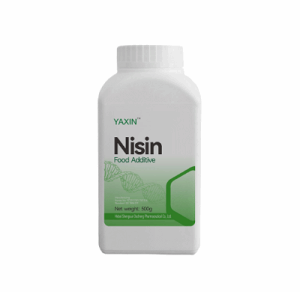
Precautions of nisin for Use

To maximize efficacy and ensure safety, the following precautions must be observed when using Nisin in meat products:
Precise Dosage Control: The recommended dosage ranges from 0.05–0.2 g/kg (based on pure Nisin, equivalent to 50–200 IU/mg), adjusted according to meat type, processing technology, and target shelf life. Excessive addition (>0.3 g/kg) may cause slight bitterness, affect sensory quality, and increase production costs; it must not exceed the national standard maximum limit (0.5 g/kg) to avoid safety risks.
Compensation for Limited Antimicrobial Spectrum: Nisin has weak direct inhibitory effects on G⁻ bacteria and fungi. It should not be used alone in meat products prone to G⁻ contamination (e.g., aquatic meat, fresh-cut meat); instead, it should be combined with EDTA, organic acids, plant extracts, or vacuum/MAP to expand the antimicrobial spectrum and prevent preservation failure.
Proper Application Methods: For meat emulsions (e.g., sausages, meatballs), mix Nisin uniformly with dry ingredients (salt, sugar) and add during chopping or marination to ensure uniform dispersion. For whole-piece meat (e.g., braised beef, ham), use soaking (0.1–0.2 g/L solution, 2–4 hours) or surface spraying (0.2–0.3 g/L solution) to achieve uniform adsorption and penetration. Avoid uneven distribution, which may lead to local over-concentration or insufficient antimicrobial efficacy.
Process Compatibility and Stability Maintenance: Nisin is heat-resistant (retains 80% activity after 121℃ sterilization for 30 minutes), suitable for high-temperature processing, but should avoid prolonged exposure to temperatures >130℃. During chopping and marination, control meat emulsion temperature ≤10℃ to prevent activity loss from high temperatures. For fermented meat products (e.g., salami), use low dosages (0.05–0.08 g/kg) to avoid inhibiting beneficial fermentation bacteria (e.g., lactobacilli).
Raw Material Purity and Storage: Select food-grade Nisin with purity ≥90% to avoid impurities (e.g., miscellaneous bacteria, fermentation by-products) affecting meat safety and quality. Store Nisin in sealed, light-resistant containers in a cool, dry environment (temperature <25℃, relative humidity <60%) to prevent moisture absorption, oxidation, or light-induced degradation; avoid mixing with strong acids, bases, or oxidizing agents.
Compliance with Regulatory Requirements: Ensure compliance with national and international standards (e.g., GB 2760, FDA) regarding permitted uses, maximum dosages, and labeling requirements. For exported products, adhere to the specific regulations of the target market to avoid non-compliance risks.
Sensory and Safety Monitoring: After adding Nisin, conduct sensory evaluations (flavor, color, texture) and microbial testing (total viable counts, pathogenic bacteria) during storage to verify efficacy and ensure no adverse effects on product quality. For special meat products (e.g., low-salt, organic), adjust the dosage and compounding scheme to meet product positioning requirements.
Other supplier products
|
|
Colistin Sulfate Soluble Powder 30% |
产品名称:生雪长清 通用名称:硫酸粘菌素可溶性粉活性成分:硫酸粘菌素描述:生雪长清为白色或类白色粉末简介:硫酸粘菌素可溶性粉是一种兽药,用于治疗家畜的细菌感染,特别是家禽和猪。该药物为可溶性粉末,可与饮用水混合制成药物溶液。硫酸粘菌素可溶性粉的主要活性成分是硫酸粘菌素,一种多肽抗生素。硫酸粘菌... |
|
|
Natamycin Exporter |
Natamycin is different from other food preservatives in terms of antibacterial spectrum:Natamycin: It has a high inhibitory effect on fungi such as... |
|
|
Nisin Powder |
Compatibility with Food ProcessingSynergy with Other Preservatives:Works well in combination with other antimicrobials (e.g., lactic acid, EDTA, ly... |
|
|
Tylvalosin Tartrate Premix |
Brand name:Shengxue TaikesCommon name:Tylvalosin tartrate premixMain ingredient:Tylvalosin tartrateCharacteristics:This product is a light yellow-b... |
|
|
Nisin Raw Material 1kg |
Nisin is generally safe for long-term use, with minimal side effects: Common side effects: Mild GI discomfort (e.g., bloating, gas) in <5% of us... |
供应产品
Same products