

Benchtop High-Precision Material Thermal Conductivity Tester (Guarded Hot Plate Heat Flow Meter Method)

Whats/App: +86 156 1874 6768
Web: standard-groups.com
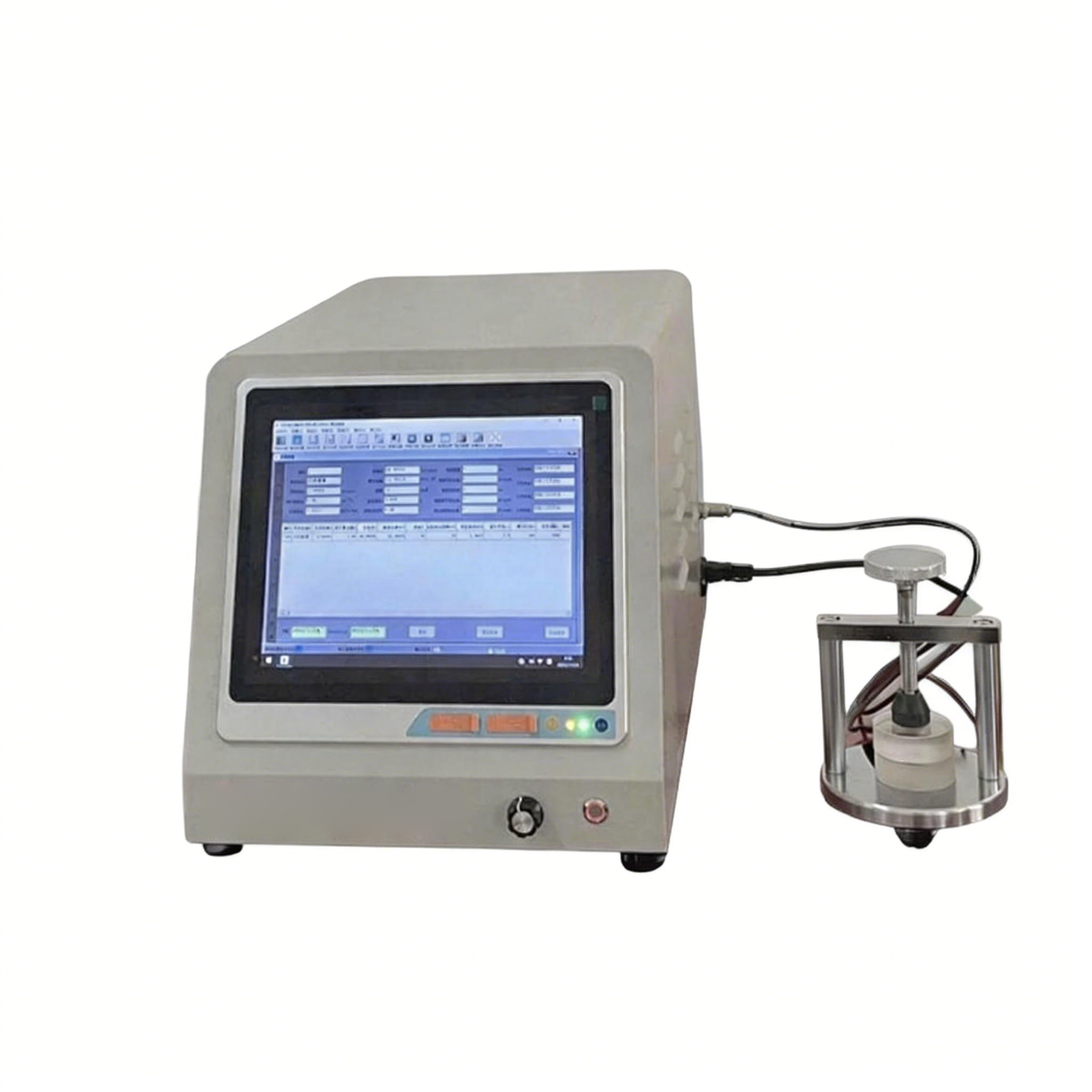
Benchtop High-Precision Material Thermal Conductivity Tester (Guarded Hot Plate Heat Flow Meter Method) is a high-precision instrument designed to measure thermal conductivity and thermal resistance of materials using the widely accepted guarded hot plate heat flow meter method. The instrument applies a stable temperature on one side of the sample, measures the heat flow transmitted to the cold side, and calculates thermal conductivity and thermal resistance automatically. Featuring imported sensors and advanced computer control, the system ensures high measurement accuracy, reliability, and excellent repeatability. It is particularly suitable for low thermal conductivity materials (accurate to 0.1 mW/m·K) and can be used to test plastics, rubber, insulation materials, aerogel panels, vacuum glass, and more. This instrument is widely applied in universities, research institutes, quality inspection agencies, and industrial enterprises.
Application
The tester is suitable for:
Plastics, rubber, and insulation materials
Aerogel panels and vacuum glass
Low thermal conductivity materials requiring high-precision measurement
Common applications include:
University and academic research: Material thermal property analysis
Industrial quality inspection: Ensuring material thermal performance
R&D laboratories: Testing new insulation or thermal management materials
Factory and production control: Material screening for thermal conductivity
Standards
The instrument complies with:
GB/T 10295-2008 – Steady-state thermal resistance and related characteristics of thermal insulation materials using the heat flow meter method
ASTM E1530 – Standard Test Method for Evaluating the Steady-State Thermal Transmission Properties of Materials
ASTM C518-04 – Standard Test Method for Steady-State Thermal Transmission Properties by Means of the Heat Flow Meter Apparatus
Parameters
| Item | Specification |
|---|---|
| Thermal conductivity range | 0.0001–1 W/m·K (accurate to 0.1 mW/m·K); 0.001–300 W/m·K |
| Measurement accuracy | ±1% |
| Sample size | 50 × 50 to 150 × 150 mm; thickness ≤50 mm |
| Sample types | Solid and powdered materials |
| Measurement time | 15–20 min |
| Hot plate temperature range | Room temperature–99.9 °C (standard); optional up to 499.9 °C; precision 0.1 °C |
| Cold plate temperature range | 0–99.9 °C (standard); optional -10–99.9 °C; precision 0.1 °C |
| Pressure range | 0–1000 N; precision 0.1 N |
| Sample thickness measurement | 0–50 mm; resolution 0.1 μm |
| Heat flux sensor | Imported heat flux meter, stable and reliable |
| Automation | Full computer-controlled measurement, data storage, and report printing |
Features
High-precision measurement for low thermal conductivity materials
Full automation from temperature control, pressure application, to data acquisition and report generation
Imported heat flux sensors for reliable and repeatable measurements
Accurate pressure application and sample thickness measurement for enhanced precision
Suitable for both solid and powdered samples
Compact benchtop design for laboratory convenience
Accessories
Main instrument
Analysis software (Chinese and English version)
HX-1005 precision low-temperature constant temperature water bath (temperature control ±0.01 °C)
Computer (e.g., Lenovo or user-selected)
Calibration reference sample
Test Procedures
Prepare the sample ensuring flat, parallel surfaces and proper dimensions.
Place the sample between the hot and cold plates.
Set the desired hot and cold plate temperatures using the computer software.
Apply controlled pressure to the sample via computer-controlled clamp.
Start the measurement; the system automatically measures heat flow and sample thickness.
Wait 15–20 minutes for the steady-state thermal condition.
Software calculates thermal conductivity and thermal resistance and generates a report.
Store or print measurement results as needed.
Maintenance Information
Keep hot and cold plates clean and free from dust or residue.
Regularly calibrate the instrument using standard reference samples.
Check the heat flux sensor for proper connection and stability.
Maintain stable laboratory environmental conditions to ensure measurement accuracy.
Ensure proper water bath operation for cold plate stability.
在线联系供应商
Other supplier products
 |
Blood Bag Emptying under Pressure Tester | Whats/App: +86 156 1874 6768 Web: standard-groups.com The Blood Bag Emptying Under Pressure Tester is suitable for testing the pressurized emptyi... |
 |
Vacuum Friction and Wear Tester | Whats/App: +86 156 1874 6768 Web: standard-groups.com The Vacuum Friction and Wear Tester integrates a proven friction and wear testing mechanism... |
 |
AATCC KMS-M6 Washer, KMS-M6D Dryer | Whats/App: +86 156 1874 6768 Web: standard-groups.com The AATCC KMS-M6 Washer and KMS-M6D Dryer are precision textile testing instruments designe... |
 |
Geomembrane Hydrostatic and Permeability Tester | Whats/App: +86 156 1874 6768 Web: standard-groups.com As the most cost-effective hydrostatic pressure tester, the Geomembrane Hydrostatic and Per... |
 |
Contact Coolness Tester STD-QM | Whats/App: +86 156 1874 6768 Web: standard-groups.com Test standard: JIS L 1927 Textiles-Measurement method of cool touch feeling property GB/T 3... |
Same products
 |
HDPE高速水冷双壁波纹管生产线 | 卖方: Shandong HUASU Plastic Technology Co.,Ltd. | 机头模具采用双流道结构、氮化磨光处理机头,偏壁调整方便快捷,保证内外层壁厚均匀和稳定成型。 最新设计密闭压力水冷冷却结构,冷却充分,多点分布真空系统,效率更高,生产速度更快。 双层在线扩口功... |
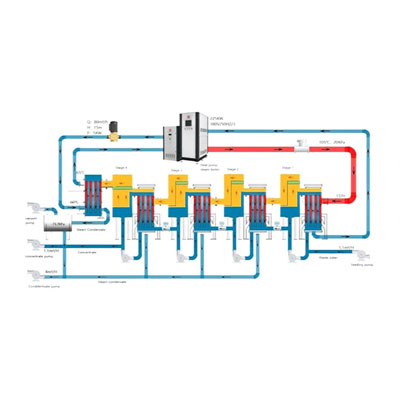 |
PanEVAP & MVR system | 卖方: Yangzhou Panstar Heat Exchanger Equipment Co., Ltd | A multiple-effect evaporator is a device that efficiently uses steam heat to evaporate water. Wat... |
 |
PanGAP wide gap welded plate heat exchanger | 卖方: Yangzhou Panstar Heat Exchanger Equipment Co., Ltd | PanGAP wide gap welded plate heat exchangerconsists of a welded plate pack with different channel... |
 |
PanBloc welded plate heat exchanger | 卖方: Yangzhou Panstar Heat Exchanger Equipment Co., Ltd | PanBloc welded plate heat exchangeris compact and efficient, although fully welded, is totally ac... |
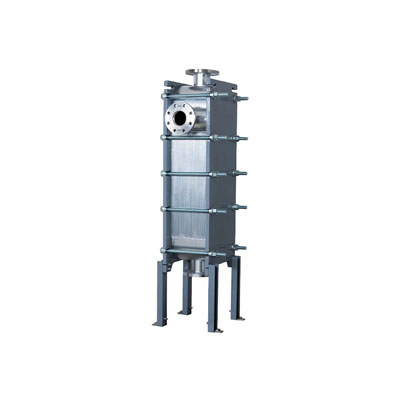 |
PanBox welded plate heat exchanger | 卖方: Yangzhou Panstar Heat Exchanger Equipment Co., Ltd | PanBox welded plate heat exchangerconsists of a laser welded plate pack with optimized corrugated... |

