C70600 Copper-Nickel Pipes for Marine Heat Exchangers

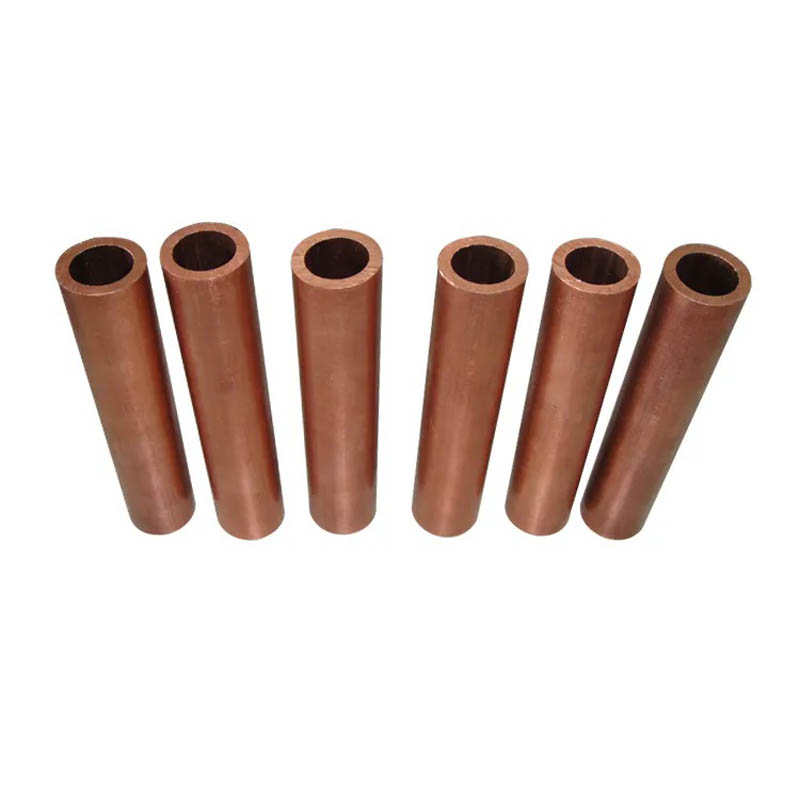
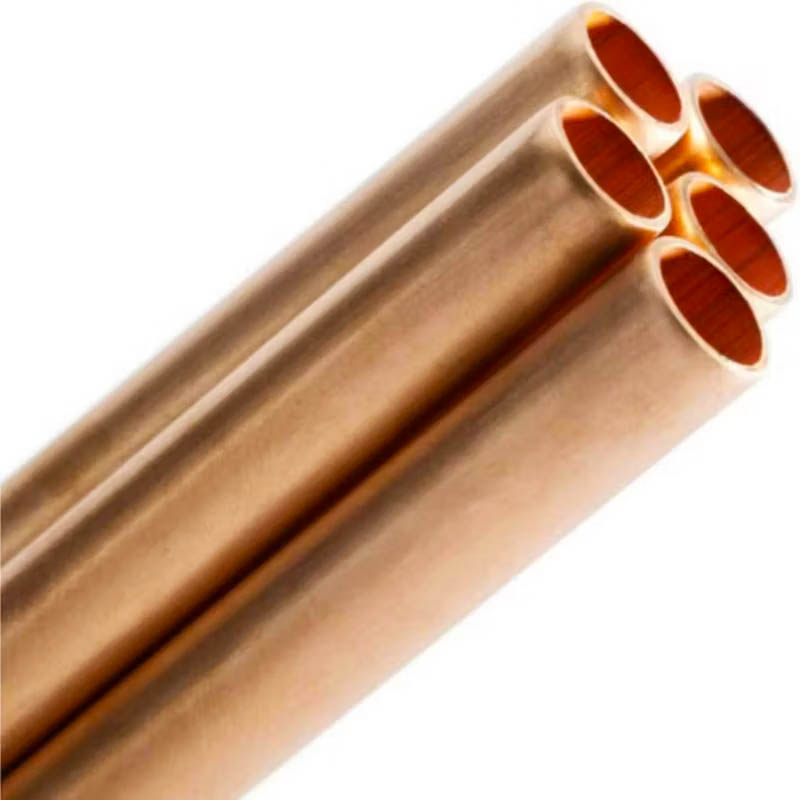
C70600 copper-nickel pipe is a typical 90/10 Cu-Ni alloy pipe, primarily composed of copper and nickel, with small additions of iron, manganese, and other elements. It offers excellent resistance to seawater corrosion, erosion-corrosion, and good thermal conductivity. Owing to these properties, C70600 copper-nickel pipes are widely used in marine heat exchangers, seawater cooling systems, central cooling systems on vessels, and offshore engineering equipment.
In seawater environments, a dense and stable protective film gradually forms on the surface of C70600 copper-nickel pipes. This film effectively slows the attack of seawater, salt spray, chloride ions, and other corrosive marine media on the pipe substrate, resulting in a long service life and reduced maintenance requirements.
During vessel operation, heat exchangers must continuously handle seawater, cooling water, or other fluids while maintaining stable heat-transfer efficiency under ongoing temperature variations and fluid erosion. Conventional metal pipes may experience corrosion, pitting, leakage, and frequent maintenance in marine environments. Through a well-balanced alloy composition, C70600 copper-nickel alloy achieves an excellent balance among seawater-corrosion resistance, mechanical properties, and heat-transfer performance. It is therefore an important material choice for marine shell-and-pipe heat exchangers and related cooling equipment.
Chemical Composition and Material Standards
The typical chemical composition of C70600 is as follows:
Copper (Cu): Balance, typically 86.5% minimum
Nickel (Ni): 9.0–11.0%
Iron (Fe): 1.0–1.8%
Manganese (Mn): ≤1.0%
Lead (Pb): ≤0.05%
Zinc (Zn): ≤1.0%
Products are manufactured in strict accordance with international standards such as ASTM B111 for seamless pipes and ASTM B466/B467 for seamless/welded pipes. They can also comply with MIL-T-16420K military specifications, EN 12451 European standards, and GB/T 8890 Chinese national standards. Each batch is supplied with a spectrographic analysis report and mechanical-property test certificate, ensuring full traceability throughout the production process.
Why C70600 Is an Ideal Choice for Marine Heat Exchangers
1. Excellent Corrosion Resistance
C70600 copper-nickel pipes demonstrate outstanding corrosion resistance in seawater, marine atmospheric, and chloride-containing environments. Their corrosion resistance is superior to that of ordinary copper pipes and brass pipes. They can effectively resist marine biofouling and chemical corrosion, ensuring long-term stable operation of heat exchangers.
2. Excellent Thermal Conductivity
The high thermal conductivity of copper enables C70600 copper-nickel pipes to provide efficient heat transfer during operation. This allows heat exchangers to maintain high heat-exchange efficiency, reduce energy consumption, and improve vessel operating efficiency.
3. Excellent Mechanical Properties
C70600 copper-nickel pipes offer good mechanical properties, including high strength, ductility, and hardness. They can withstand various mechanical stresses encountered during vessel operation, ensuring the structural integrity and stability of the heat exchanger.
4. Excellent Fabricability
C70600 copper-nickel pipes are easy to process and form. They can be cut, bent, welded, and otherwise fabricated according to customer requirements. This makes installation and maintenance more convenient and flexible.
5. Excellent Resistance to Biofouling
The surface of C70600 copper-nickel pipes has natural anti-biofouling properties, effectively preventing marine organisms from adhering to and growing on the pipe wall. This helps keep the piping clean, reduces heat-exchanger flow resistance, and improves operating efficiency.
Typical Applications in Marine Heat Exchangers
C70600 copper-nickel pipes are widely used in the following marine systems:
1.Main and auxiliary condensers and coolers: Standard piping material for seawater cooler bundles of main engines and auxiliary engines.
2.Seawater cooling piping: Fittings, elbows, and straight pipes for vessel-wide seawater cooling systems.
3.Central coolers: Heat-transfer pipes for plate-type and shell-and-pipe heat exchangers.
4.Oil coolers: Lubricating-oil coolers using seawater or freshwater as the cooling medium.
5.Freshwater generators and seawater desalination units: Pipe bundles for evaporators and condensers.
Other supplier products
All supplier products
Same products