


L-Lysine monohydrochloride as nutrient additives


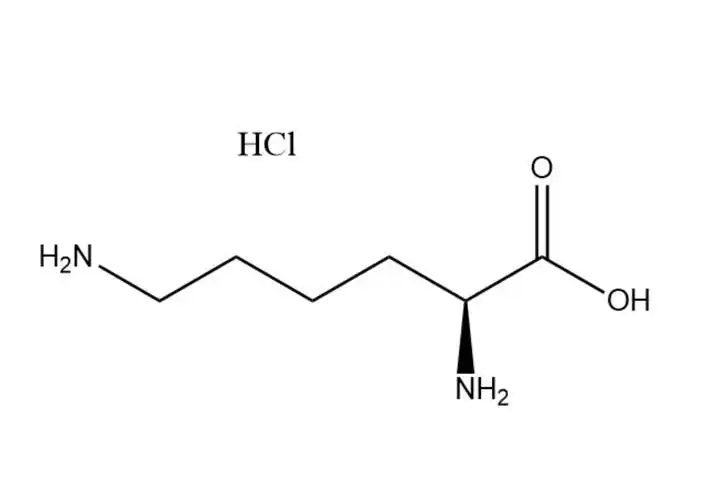
Free L-lysine is highly hygroscopic—it absorbs atmospheric moisture rapidly at relative humidity (RH) >60%, leading to caking, agglomeration, and difficulty in handling/bulk storage. L-Lysine monohydrochloride, by contrast, is slightly hygroscopic: it only absorbs trace moisture at RH <80% and no significant hygroscopy at the standard industrial storage RH (50–70%). Its high crystallinity (orthorhombic crystal system) further prevents caking and agglomeration, even after long-term bulk storage or transportation. This advantage:
- Reduces storage and transportation costs (no need for special moisture-proof packaging for short-term storage).
- Ensures consistent flowability for industrial processing (e.g., feed pelleting, food fortification, pharmaceutical dry granulation), avoiding equipment blockage and uneven mixing.
- Maintains the physical form of solid formulations (tablets, capsules, premixes) without disintegration or stickiness during shelf life.
在线联系供应商
Other supplier products
 |
L-Threonine | While not a primary preservative, L-threonine can: Improve the stability of proteins and enzymes in processed foods, reducing degradation. Act as a... |
 |
L-Methionine in Cosmetic and Personal Care Applications L-Methionine is incorporated into cosmetic and personal care products due to its role in maintaining skin, hair, and nail health: Skin Care Prod | L-Methionine in Cosmetic and Personal Care Applications L-Methionine is incorporated into cosmetic and personal care products due to its role in ma... |
 |
DL-methionine powder | DL-Methionine is used in the food industry as a nutritional fortifier and processing aid, with applications focused on improving the nutritional qu... |
 |
Sucralose | Product Name:SucraloseMolecular Weight: 397.63Molecular Formula: C12H19Cl3O8CAS Number: 56038-13-2EINECS Number: 259-952-2Appearance: White to off-... |
 |
L-Threonine | Physical Properties in Biological Systems of L-ThreonineHydrophilicity: The hydroxyl group and ionizable groups make L-threonine hydrophilic, so it... |
Same products
 |
High quality N‑Acetyl‑L‑Tryptophan Powder | 卖方: 846340 | Basic Information of N‑Acetyl‑L‑Tryptophan 1. Core Identity Chemical Name: N‑α‑Acetyl‑L‑try... |
 |
N-Acetyl-L-Tryptophan | 卖方: 846340 | Key Points for Storing N‑Acetyl‑L‑Tryptophan (NAT) Short, practical storage rules focusing on moi... |
 |
N-Acetyl-L-Tryptophan Powder Marke quotation | 卖方: 846340 | Precautions for the Use of N‑Acetyl‑L‑Tryptophan (NAT) Below is a clear, practical summary of pre... |
 |
Wholesale N-Acetyl-L-Tryptophan Powder | 卖方: 846340 | N‑Acetyl‑L‑Tryptophan as Key Advantages for Food Applications High stability: Withstands processi... |
 |
N-Acetyl-L-Tryptophan Supplier | 卖方: 846340 | N‑Acetyl‑L‑Tryptophan as Regulatory Status (Summary)China: Approved as a food additive (flavor en... |

