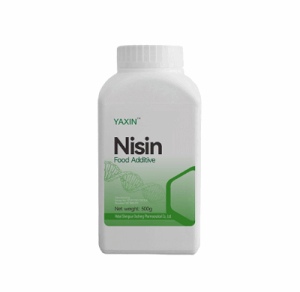
Nisin Powder
Practical Implications for Food Applications
Formulation Considerations:
When using nisin in food products, the pH of the matrix affects both its efficacy and shelf life. For example:
In acidic foods (e.g., yogurt, pickles, fruit juices), nisin remains stable and effective throughout storage.
In neutral or slightly alkaline foods (e.g., some cheeses, processed meats), nisin may degrade faster, so manufacturers must balance pH control with other preservation methods (e.g., refrigeration, reduced water activity) to maintain its activity.
Storage of Nisin - Containing Products:
Foods preserved with nisin should be stored within pH ranges that maximize its stability. If the product’s pH shifts during storage (e.g., due to microbial metabolism), nisin’s efficacy may be compromised.
Other supplier products
|
|
Natamycin 7681-93-8 |
As a natural biological preservative, natamycin is relatively easy to degrade in the natural environment and will not remain in the environment lik... |
|
|
Natamycin 7681-93-8 |
In Beverages Fruit Juice Beverages: Adding natamycin to fruit juices can inhibit the growth of mold and yeast, preventing fermentation and spoilage... |
|
|
Nisin Powder Supplier |
Nisin, a natural antimicrobial peptide produced by certain strains of lactic acid bacteria (primarily Lactococcus lactis), is widely used in the fo... |
|
|
Natamycin Bulk supply |
In addition to the advantages of broad antibacterial spectrum and strong stability mentioned earlier, natamycin also has the characteristics of hig... |
|
|
Natamycin Supplier |
Natamycin differs from other food preservatives in terms of safety: Natamycin: very low acute toxicity, no genotoxicity, no adverse effects on the ... |
供应产品
Same products