

Eddy Current Testing Equipment

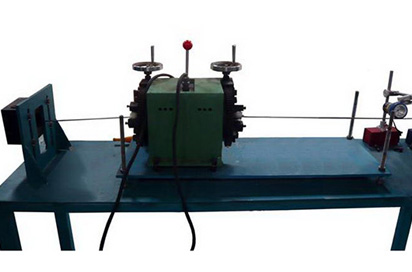
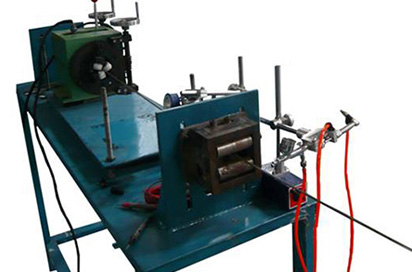

GSET-551 Steel Wire Eddy Current Flaw Detector Brief
Using the eddy current signal processing method and high-performance DSP algorithm, the NDT wire rope testerdetection ability of micro-crack is as high as 0.05mm deep crack.
Using computer digital technology and "digital eddy current detection technology" to achieve high-speed data processing capabilities, detection speed can be reached to 1~500m/min. Technology can effectively suppress all kinds of interference signals. It has waveform, amplitude, phase, X-axis and Y-axis signals.
The professional "digital filtering" is adopted to effectively suppress the interference signal in the field and ensure the accuracy and stability of the detection.
Features of GSET-551 Steel Wire Eddy Current Flaw Detector
The detector detects the minimum metal cross-sectional area change and the minimum length of the damage length corresponding to the local damage.
The detector detects the minimum metal cross-sectional area change and the damage length minimum size corresponding to the metal cross-sectional area loss.
The maximum value of the random error obtained by performing multiple consecutive measurements of the same metal cross-sectional area change in the same test sample under the same test environment and conditions within the instrument range.
Within the range of the instrument, the metal cross-sectional area of the test sample is linearly proportional to the absolute value of the maximum deviation between the measured curve of the instrument and the calibration curve fitted by the measured value of the cross-sectional area of the metal.
The value of the metal cross-sectional area loss measured by the instrument minus the actual value of the metal cross-sectional area loss within the instrument's range.
In the range of the instrument range, under the condition of the length loss of the cross-sectional area of the metal, the cross-sectional area loss of the metal on the wire rope measured by the detector is matched with the value of the loss of the cross-sectional area of a group of wire ropes measured by the instrument. The absolute value of the maximum deviation between the calibration curves.
The detector is capable of detecting the resolved minimum distance.
The detector can detect and display changes in metal cross-sectional area loss (LMA) on one channel, and detect and display local damage (LF) on the other channel. The detector recording device can be a computer, graphic recorder or other matches. device.
The detector cannot simultaneously detect and display metal cross-sectional area loss changes and local damage, and can only detect and display one of them. The detector recording signal device can be a computer, a graphic recorder or other matching devices.
The detector principle and composition meet the requirements of the GB/T 21837-2008 standard, and it has a detector for detecting distance display, data storage or recording function.
GSET-551 Steel Wire Eddy Current Flaw Detector performance
|
Detection channel |
Single-channel |
|
Detection speed |
1~500m/min(on-line) |
|
Frequency range |
100Hz-10MHz |
|
gain |
0~99dB,step size 0.1dB |
|
Advanced filtering |
have |
|
High pass |
|
|
Low pass |
1Hz~10000Hz |
|
Phase rotation |
0-360 ° step 1 ° |
|
Synchronized alarm output controlled by an internal and external clock |
|
High precision end and end-to-tail signal removal |
|
High precision real-time, delayed alarm output |
|
Fast digital/analog electronic balance |
|
Memory track delay blanking function |
|
Real-time impedance plane display |
|
The instrument a match any probe |
|
Remote automatic help system |
|
Computer full digital parameter adjustment |
|
Non-equal amplitude phase/amplitude alarm domain |
Nanjing BOKENA Automation System Co., Ltd., originated from the eddy current testing laboratory of the Nanjing University of Technology. It isone of the most professional ndt testing equipment suppliersin China. We sincerely invite and welcome people from all around the world to invest and create more values together.
在线联系供应商
Other supplier products
 |
GSET-551 Steel Wire Eddy Current Flaw Detector | GSET-551 Steel Wire Eddy Current Flaw Detector Brief Introduction Using the eddy current signal processing method and high-performance DSP algor... |
 |
GSET-551 Steel Wire Eddy Current Flaw Detector | GSET-551 Steel Wire Eddy Current Flaw Detector Brief Introduction Using the eddy current signal processing method and high-performance DSP alg... |
 |
Eddy Current Testing Equipment | Are you looking for eddy current equipment for sale? ECT Eddy current testing is a non-contact testing method, which mainly uses the electromagneti... |
 |
Steel Pipe Testing | Steel having a hollow section that is much longer than the diameter or circumference. According to the cross-sectional shape, it is divided into ro... |
 |
Drill Pipe Magnetic Flux Leakage Detector MFL-308 | Specifications: diameter Φ73 / Φ89 mm, length 9.6m or so Detection speed: 6-20 m / min Acceptance criteria: American Petroleum Institute ... |
Same products
 |
多级串联精密滚柱轴承T-3092-6A有货 | 卖方: JinHang Precision Bearing Co.,LTD | 轴承出厂编号:T-3092-6A项目代码:T-3092-6A结构:基本型串联推力圆柱滚子轴承原产地:中国洛阳润滑:油润滑外形公制尺寸:30*92*294mm它们在橡胶和塑料行业的平行双螺杆挤出机... |
 |
食品螺杆挤出机多级串联推力轴承T-2872-6A | 卖方: JinHang Precision Bearing Co.,LTD | 轴承出厂编号:T-2872-6A项目代码:T-2872-6A原产地:中国洛阳润滑:油润滑外形公制尺寸:29*75*165mm外径D:75mm内径d:29mm总高度:165毫米它们在橡胶和塑料行业... |
 |
薄膜螺杆挤出机齿轮箱串联滚柱轴承T-25105 8A | 卖方: JinHang Precision Bearing Co.,LTD | 轴承出厂编号:T-25105 8A项目代码:T-25105.8A原产地:中国洛阳润滑:油润滑外形尺寸:25*105*255mm外径D:105mm内径d:25mm总高度:395mm它们在橡胶和塑料... |
 |
PVC螺杆挤出设备齿轮箱滚柱轴承T-25105 8A | 卖方: JinHang Precision Bearing Co.,LTD | 应用:橡胶和塑料工业中单螺杆和双螺杆挤出机的变速箱。深孔钻削设备摩擦焊机。轴承出厂编号:T-25105 8A项目代码:T-25105.8A原产地:中国洛阳润滑:油润滑外形尺寸:25*105*25... |
 |
食品挤出机多级串联推力轴承T-25105.6A工厂现货 | 卖方: JinHang Precision Bearing Co.,LTD | 轴承出厂编号:T-25105.6A项目代码:T-25105.6A原产地:中国洛阳润滑:油润滑外形尺寸:25*105*255mm外径D:105mm内径d:25mm总高度:255毫米轴承轴直径:0.... |

